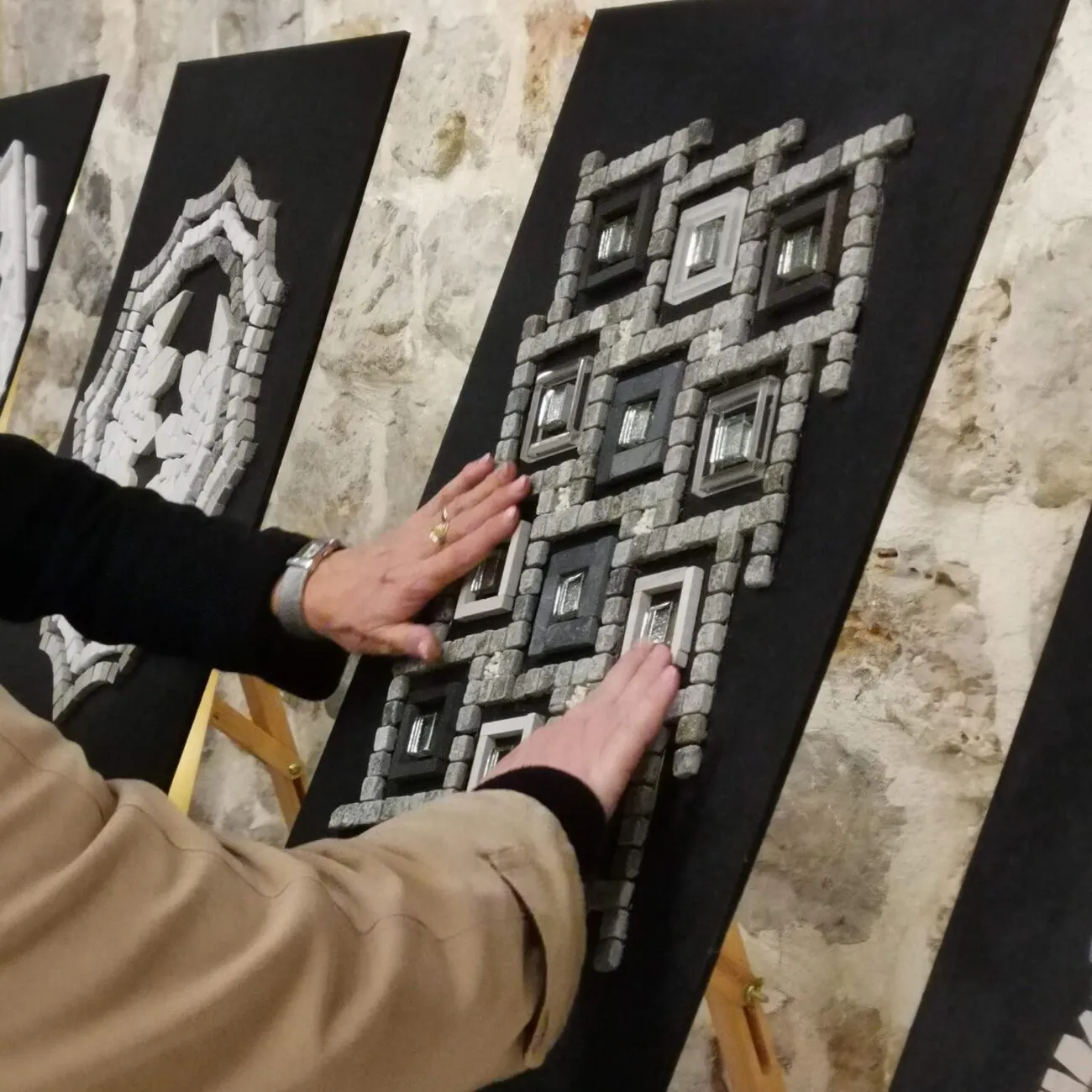
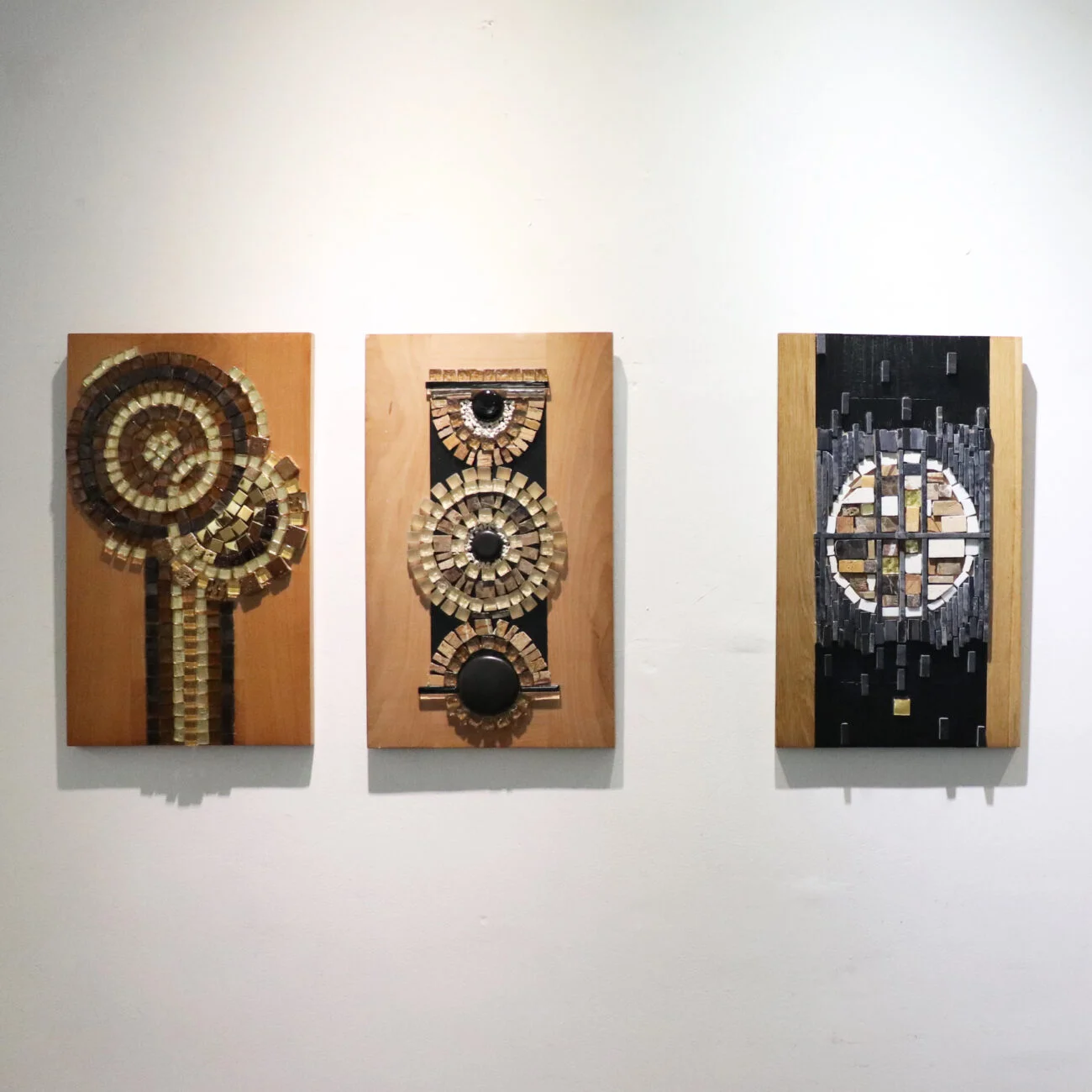
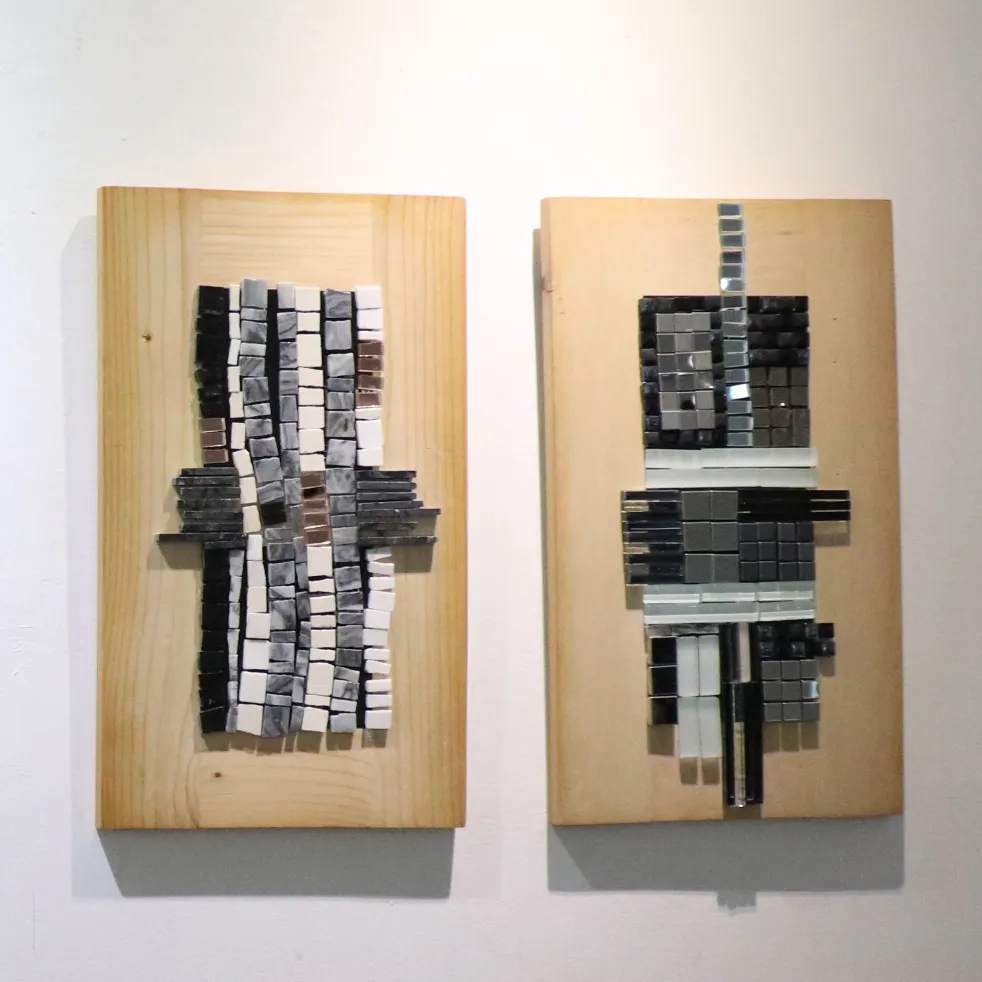
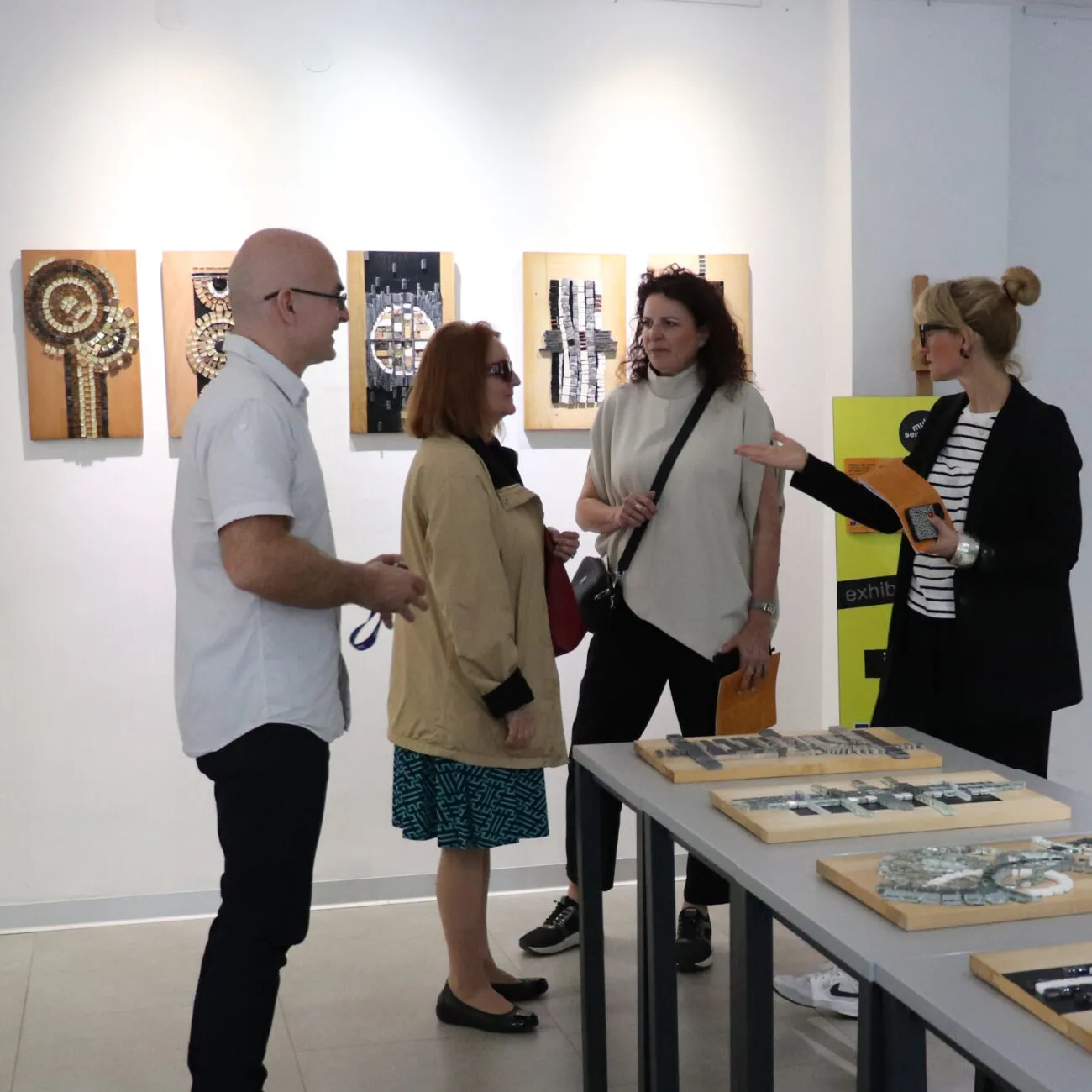
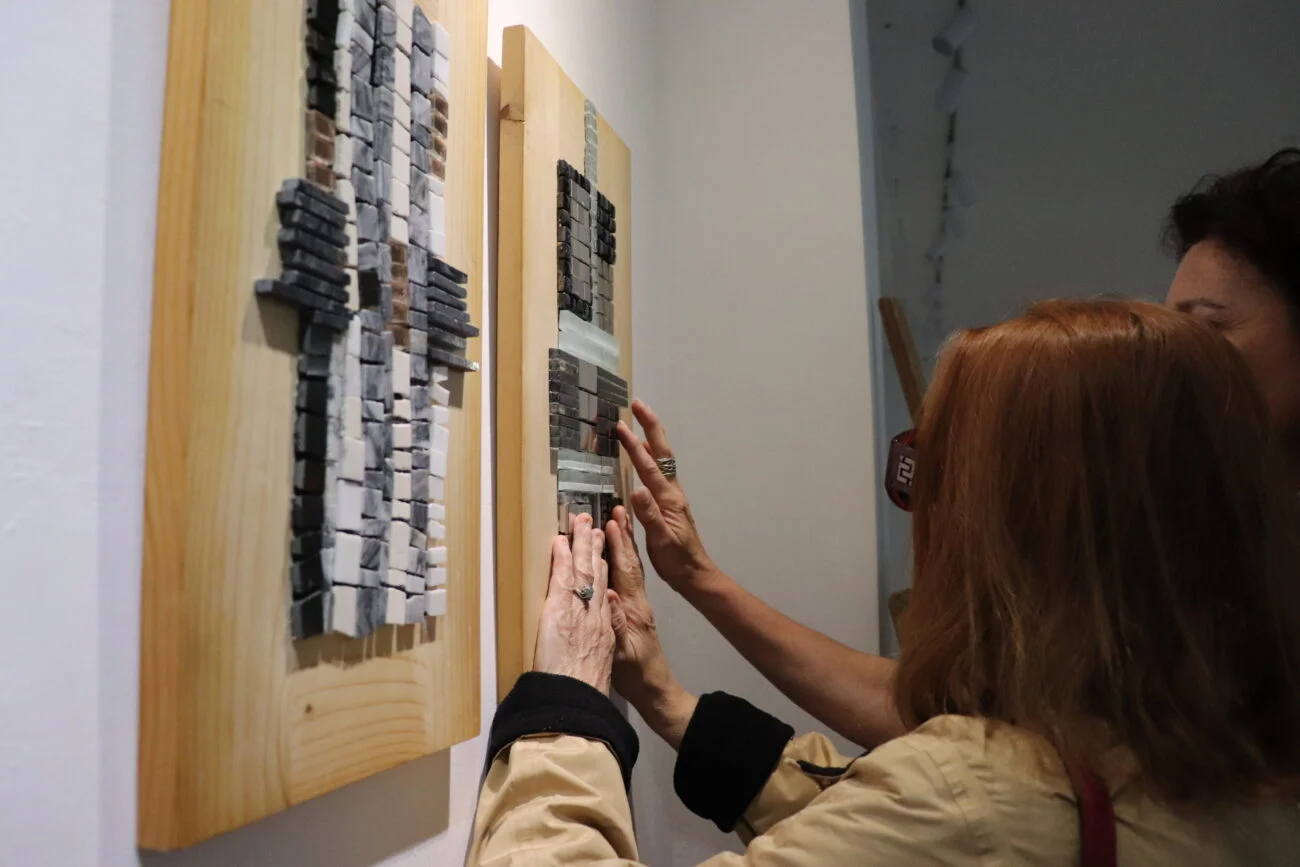
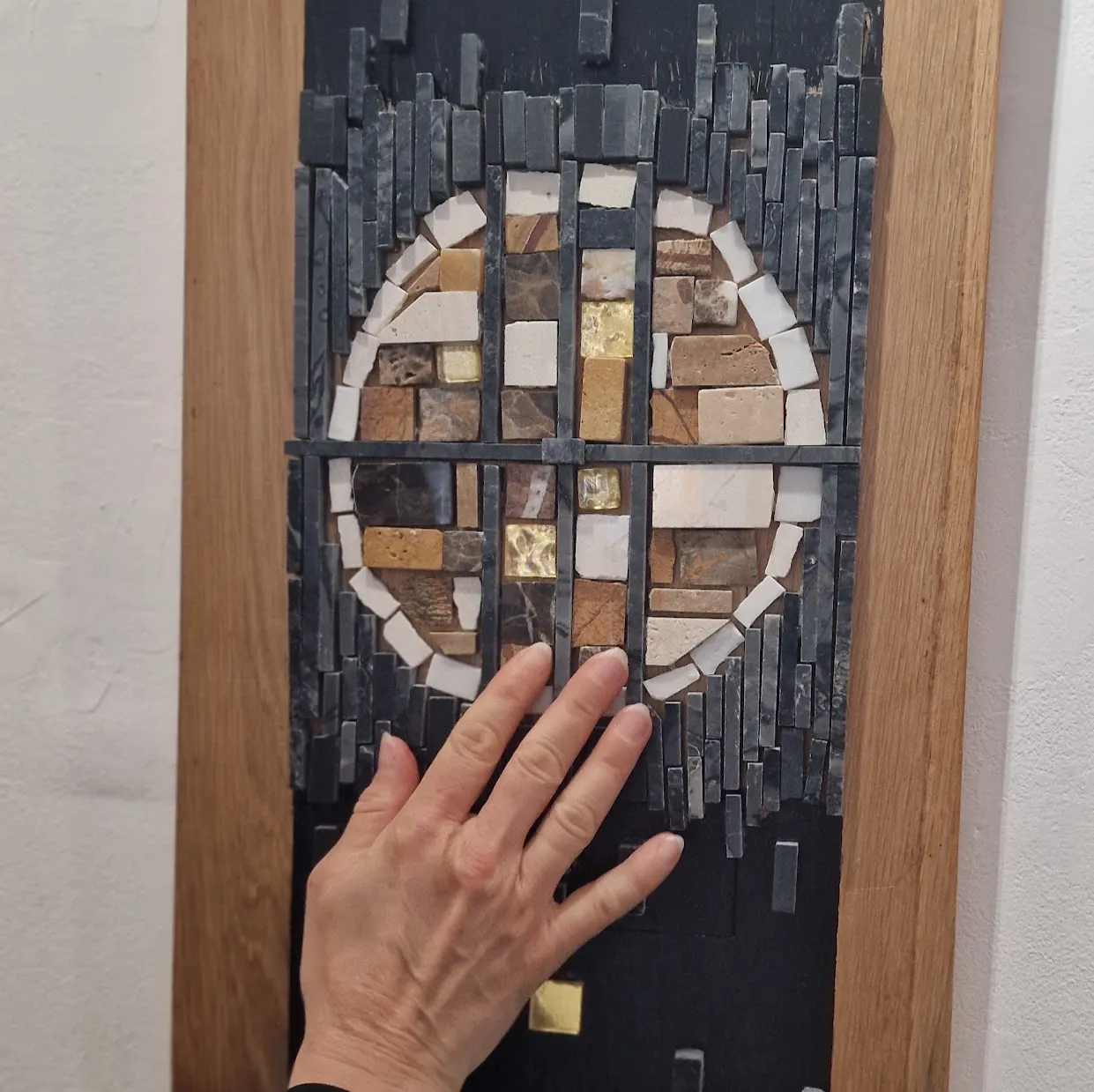
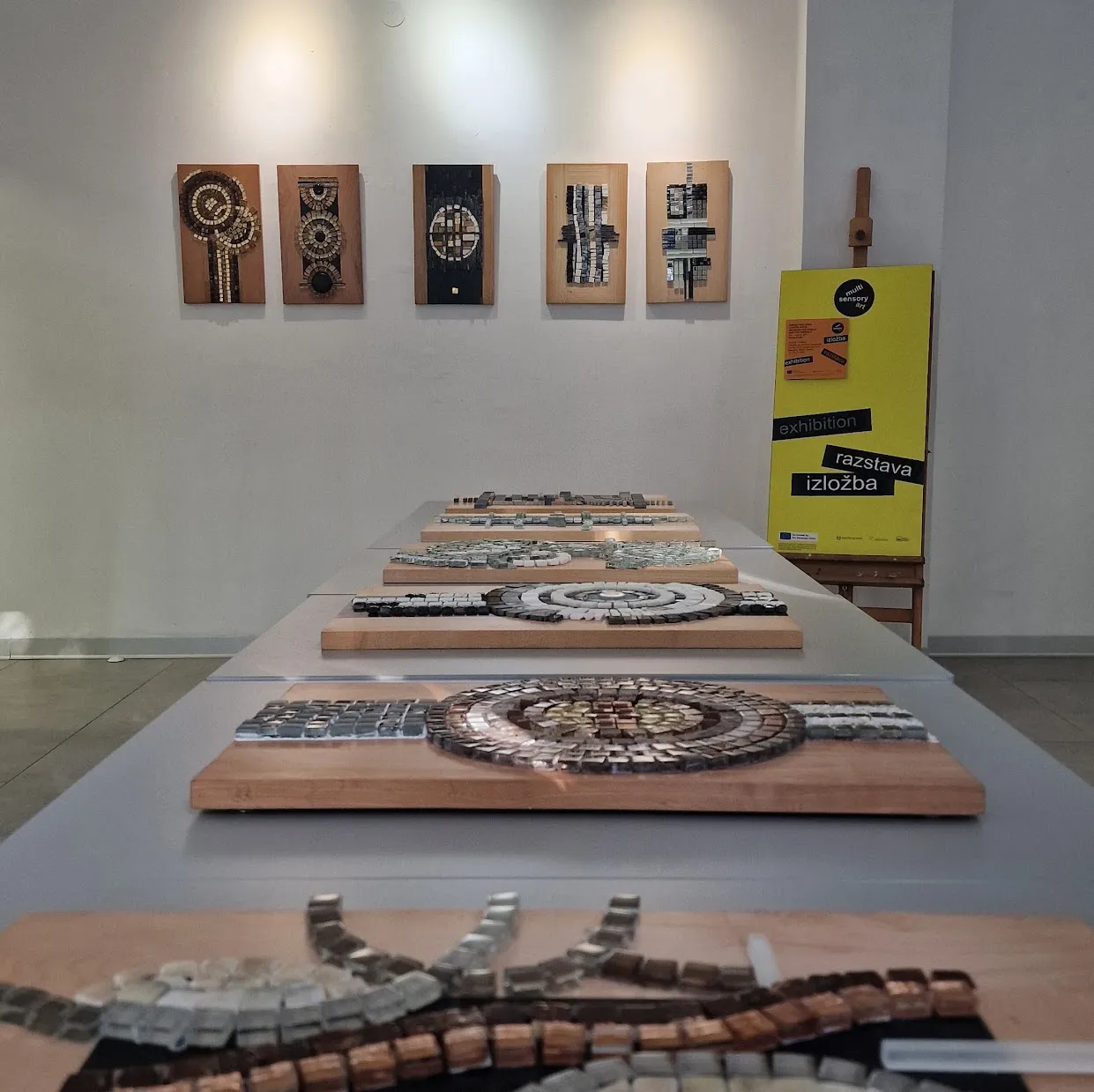
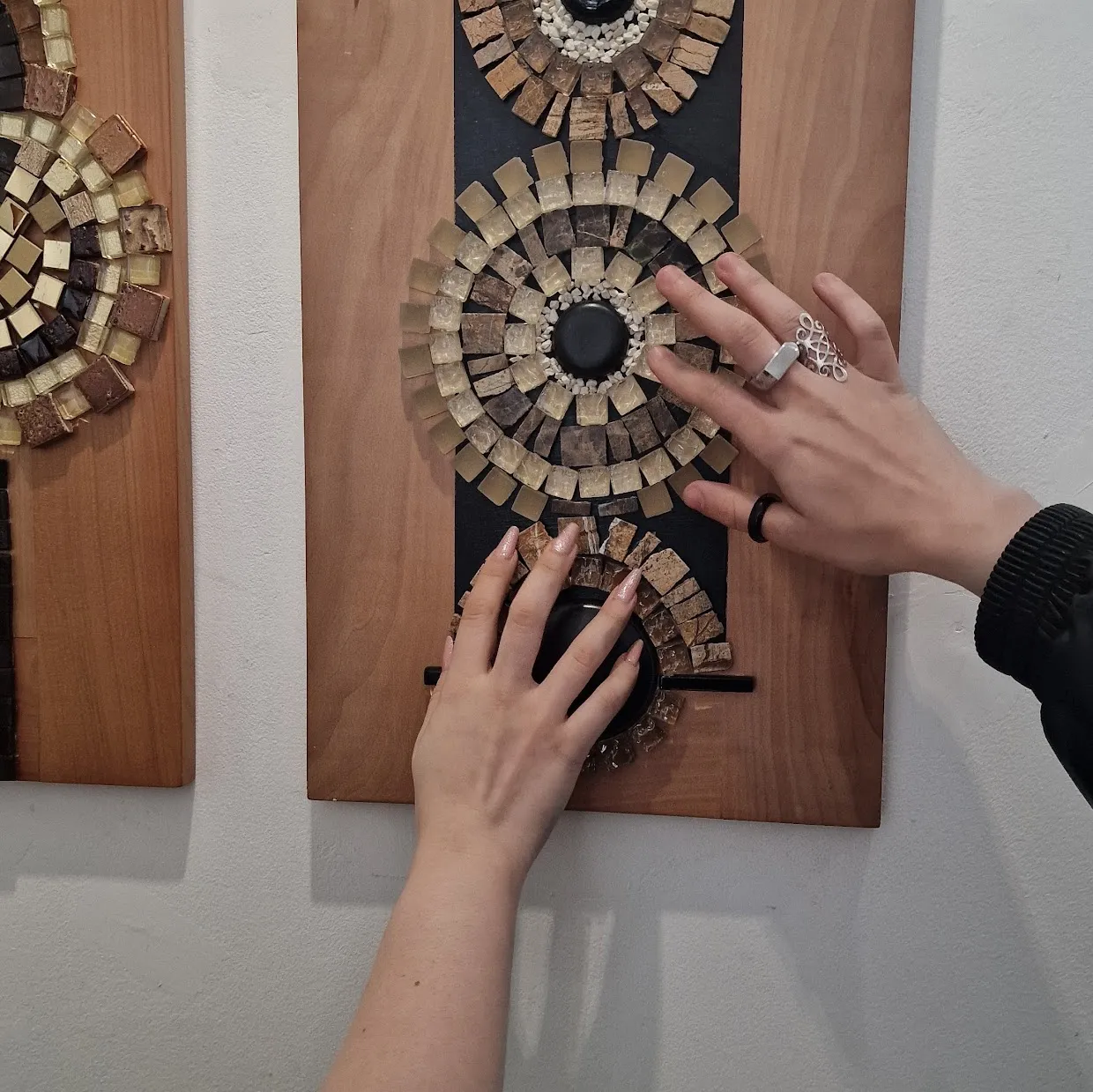
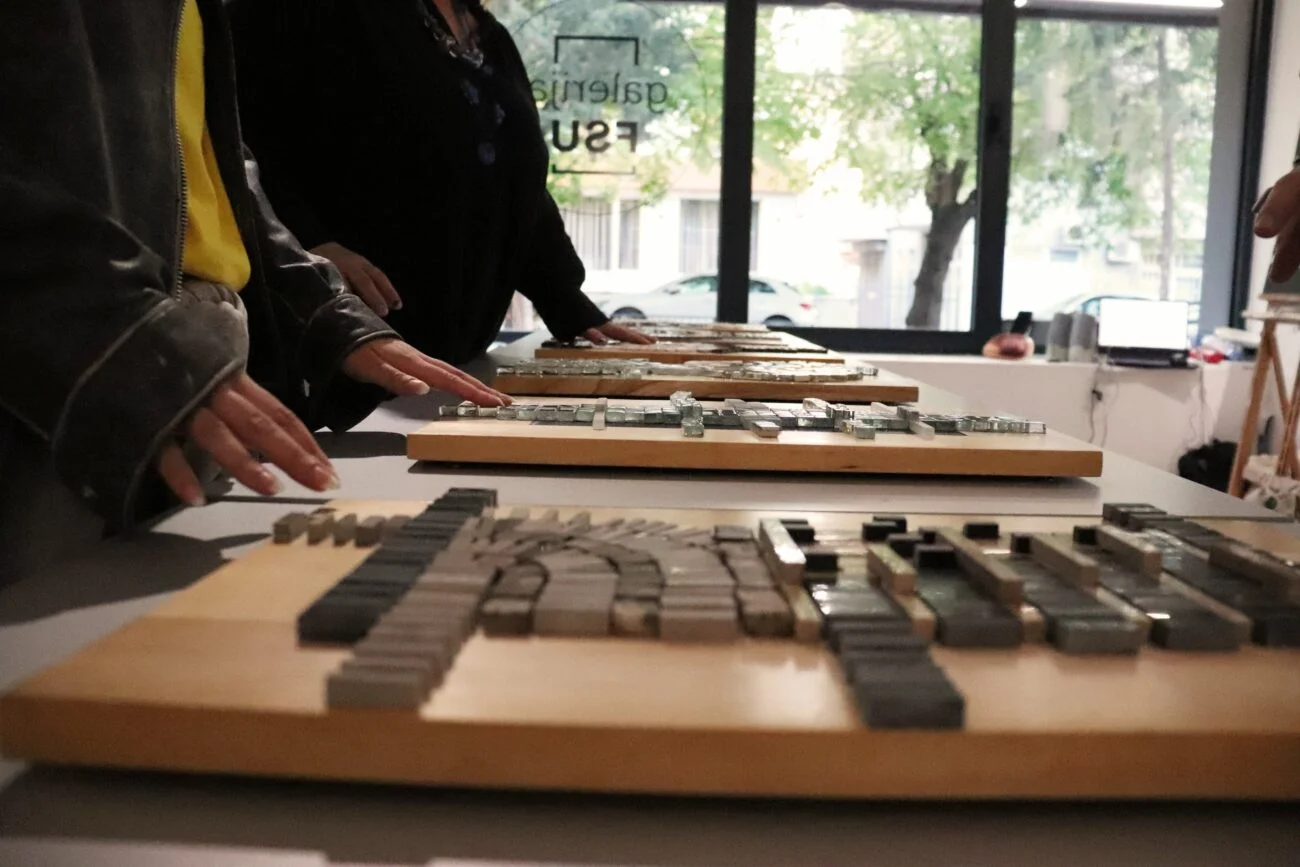
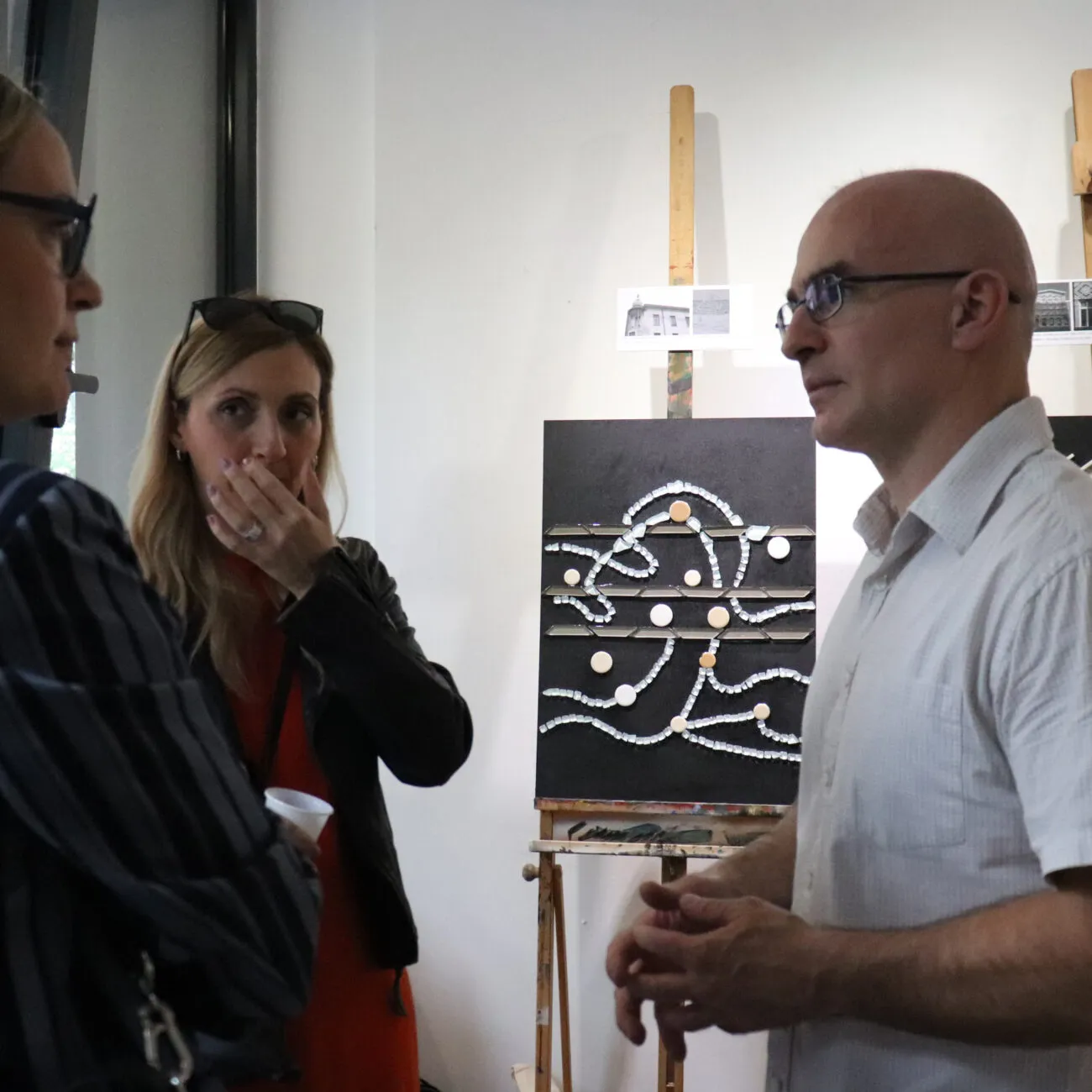
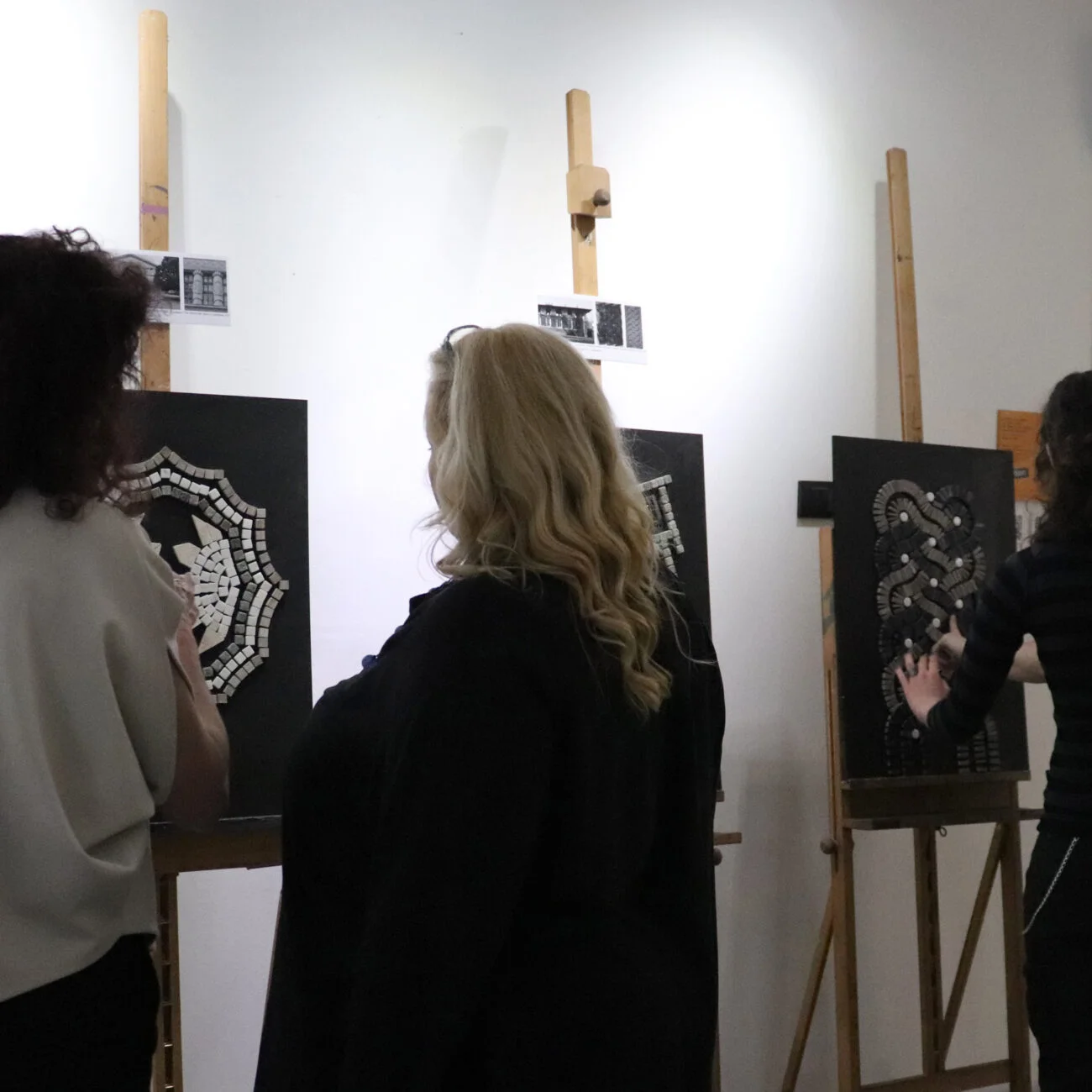
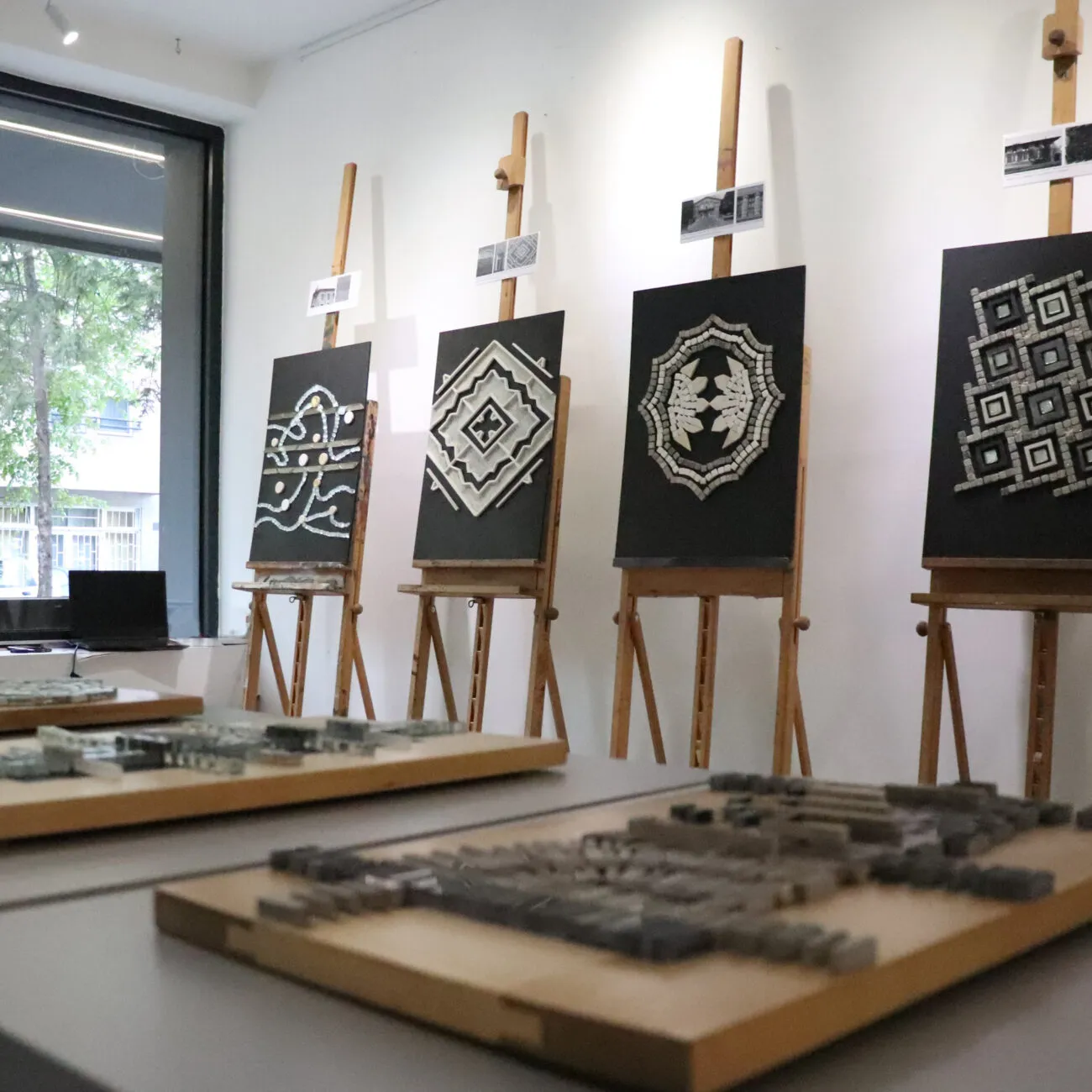
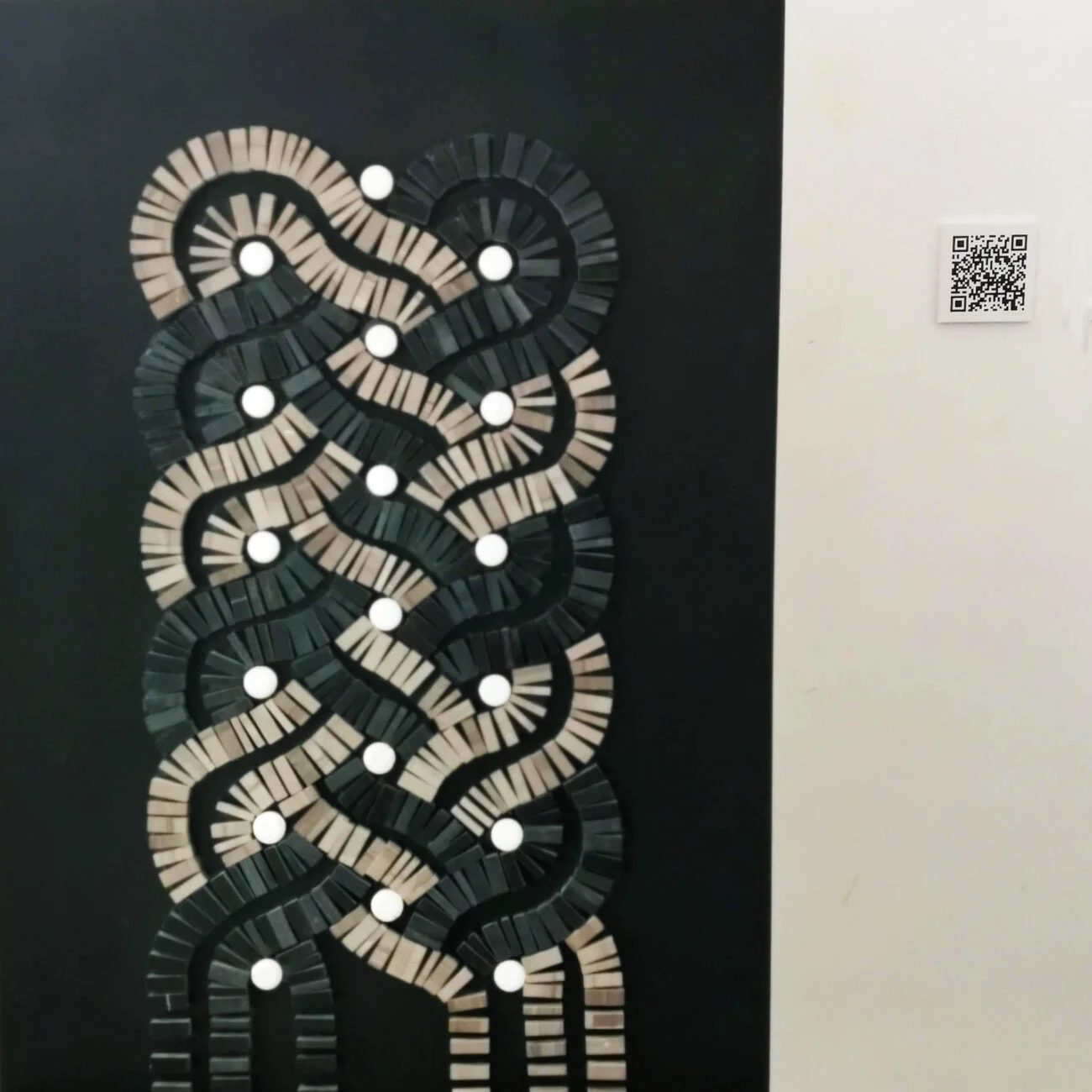
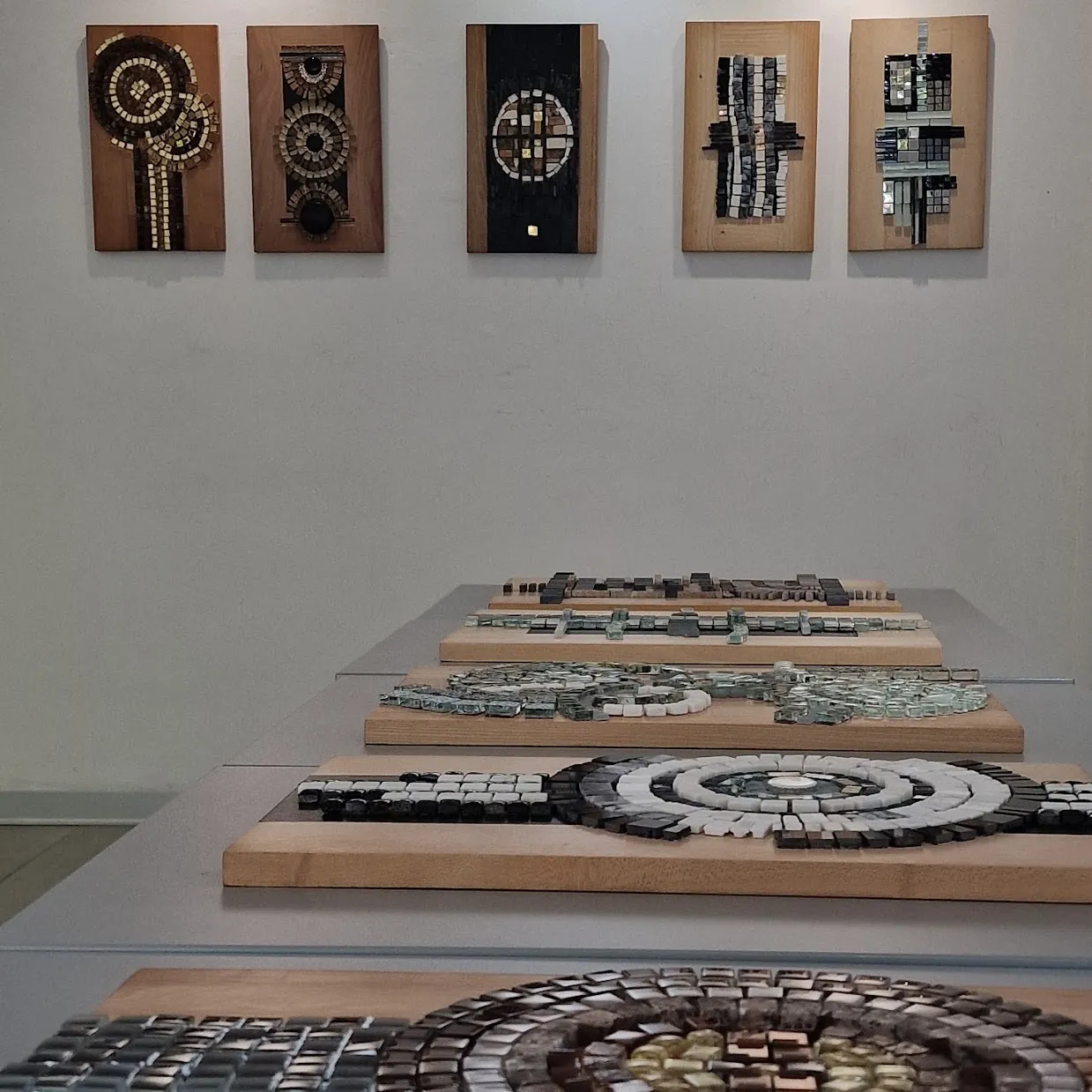
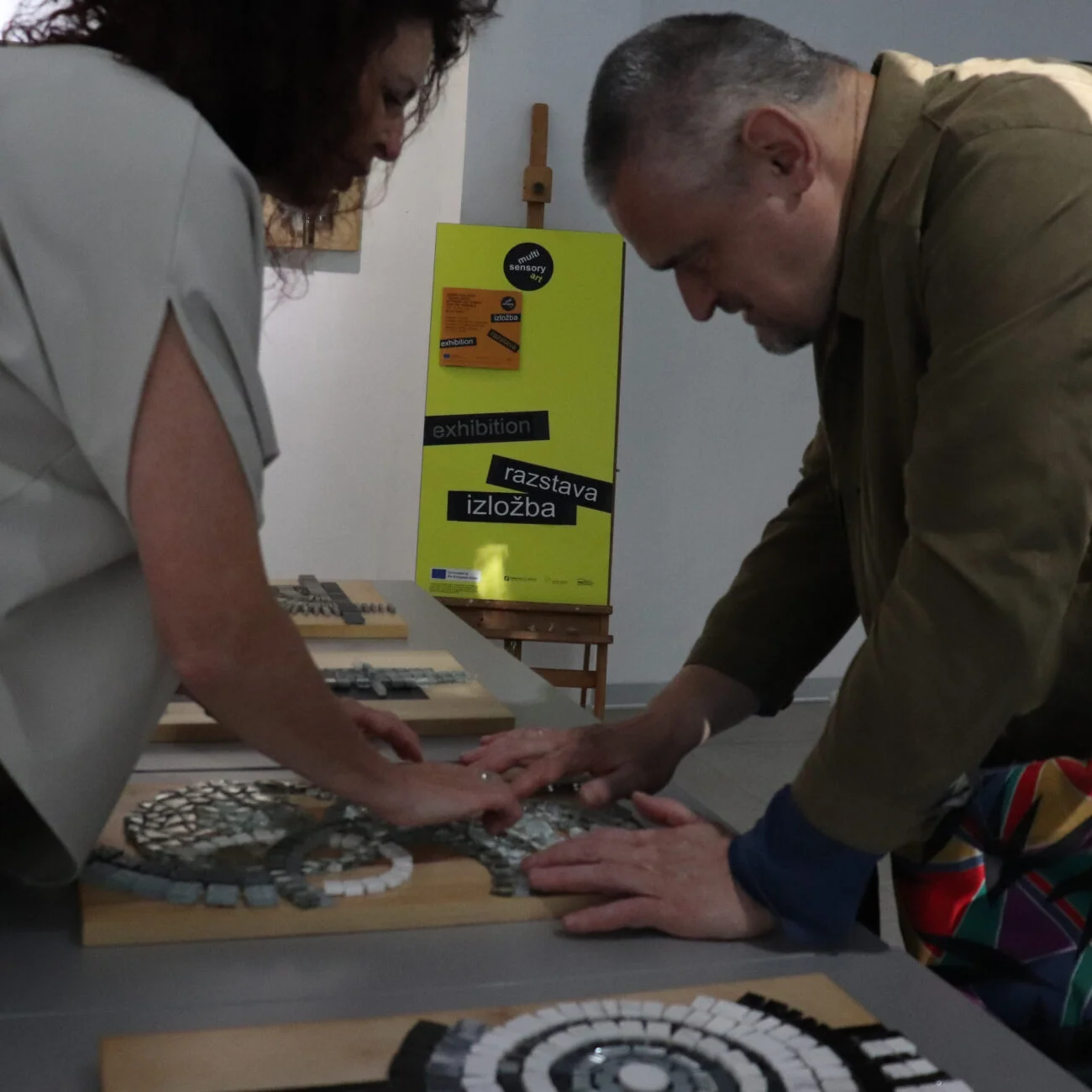

The exhibition presents a selection of mosaics created based on the cultural heritage of Ljubljana and its characteristic architectural ornaments. The works are designed for both sighted and blind or visually impaired visitors, as they offer the opportunity to experience art through sight as well as touch, texture, and material.
The starting point of the creative process were samples of Ljubljana’s facades, as seen in the works of architects of Slovenian architecture from the early 20th century: Maks Fabian, Ivan Vurnik, and Jože Plečnik. The mosaics intertwine Fabian’s floral ornaments of the Krisper House, geometric motifs of the Vurnik House, the former Cooperative Bank, and the Sokol House Tabor. Plečnik’s patterns are reflected in his characteristic rhythmic structures of the facade of the carpentry workshop in Žale and in the ornament of graphic design presented at the exhibition “Forma perennis”.
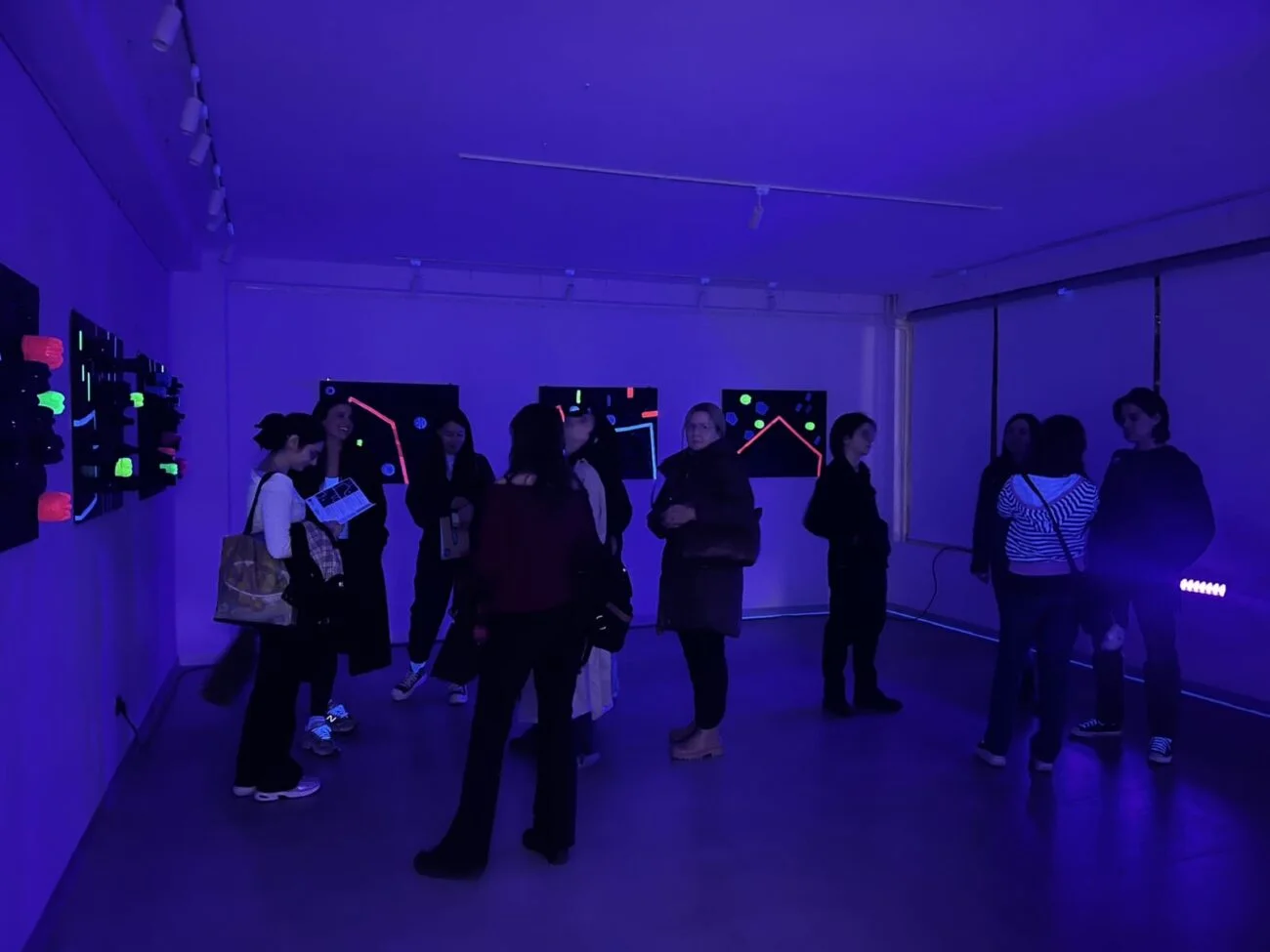
The author has transformed architectural motifs into tactile forms using stone, ceramics, and glass of various shapes, sizes, colors, and textures. Relief mosaics have been created that invite visitors to touch and explore their surfaces. In addition to direct interpretations of architectural and graphic patterns, the exhibition also includes more abstract works, where shapes and compositions express the author’s personal response to architecture – its geometry, rhythm, and materiality.
The exhibition opens up a space for a different perspective on cultural heritage, which is often inaccessible to touch and therefore usually not accessible to the blind and visually impaired. The mosaics allow us to feel it with our hands, understand its structure, and connect with it through direct, sensory experience.