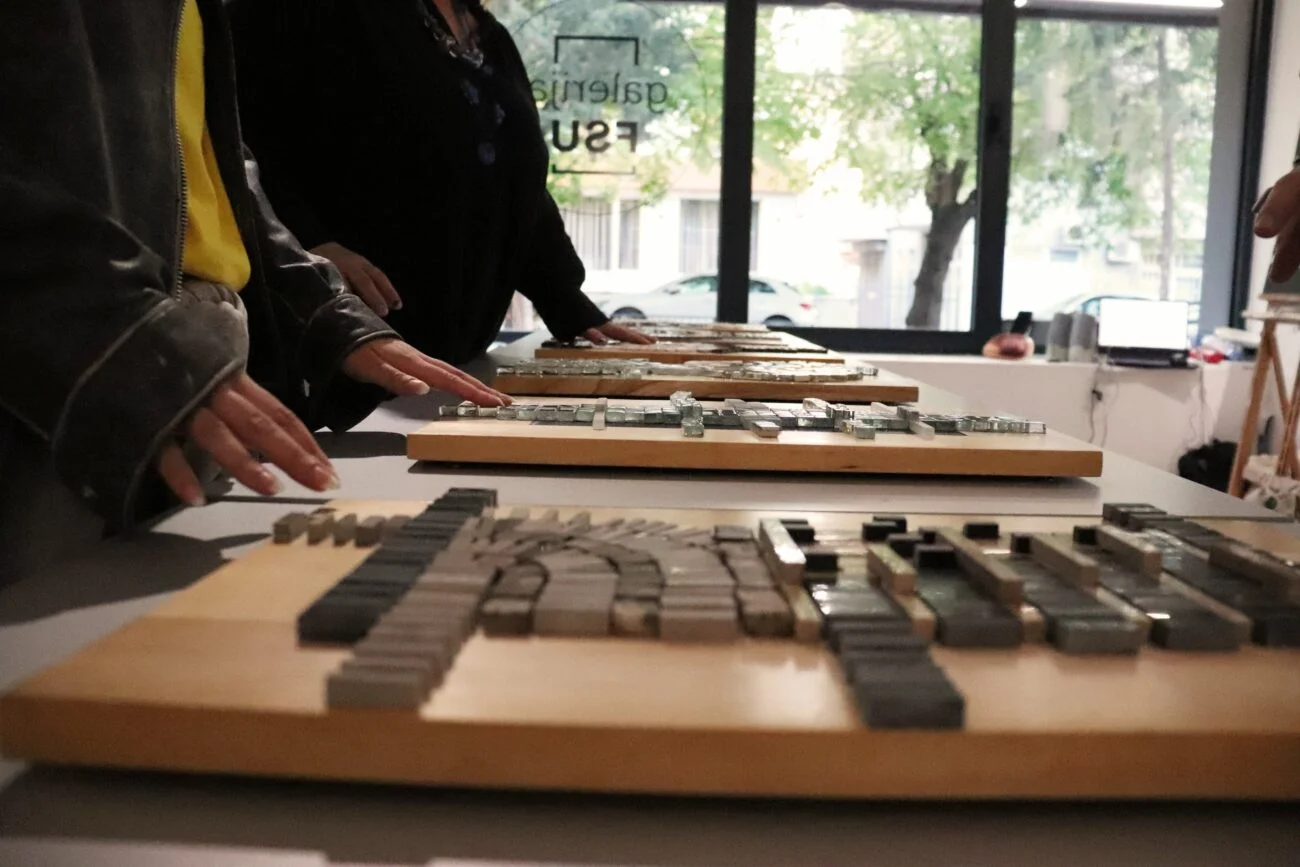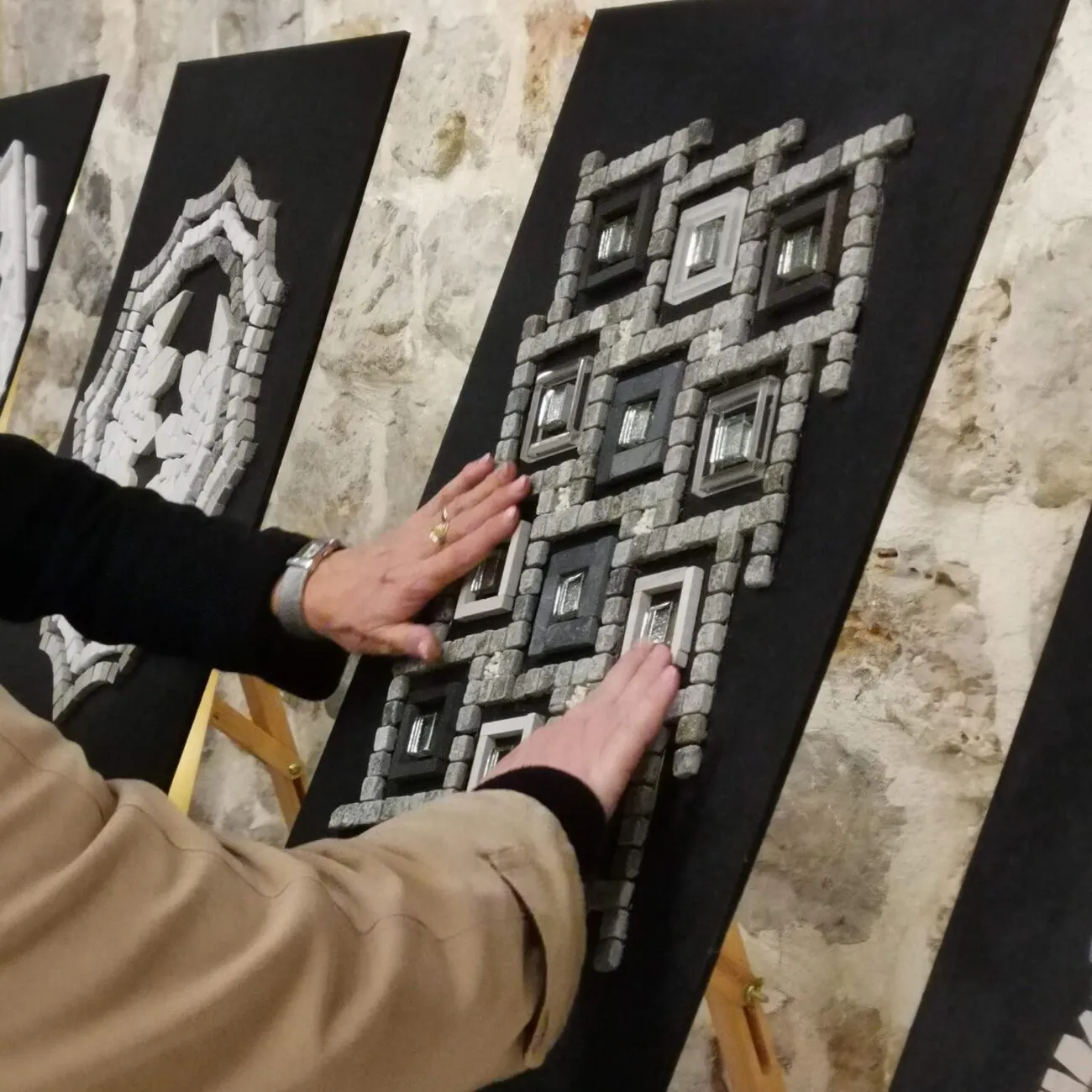
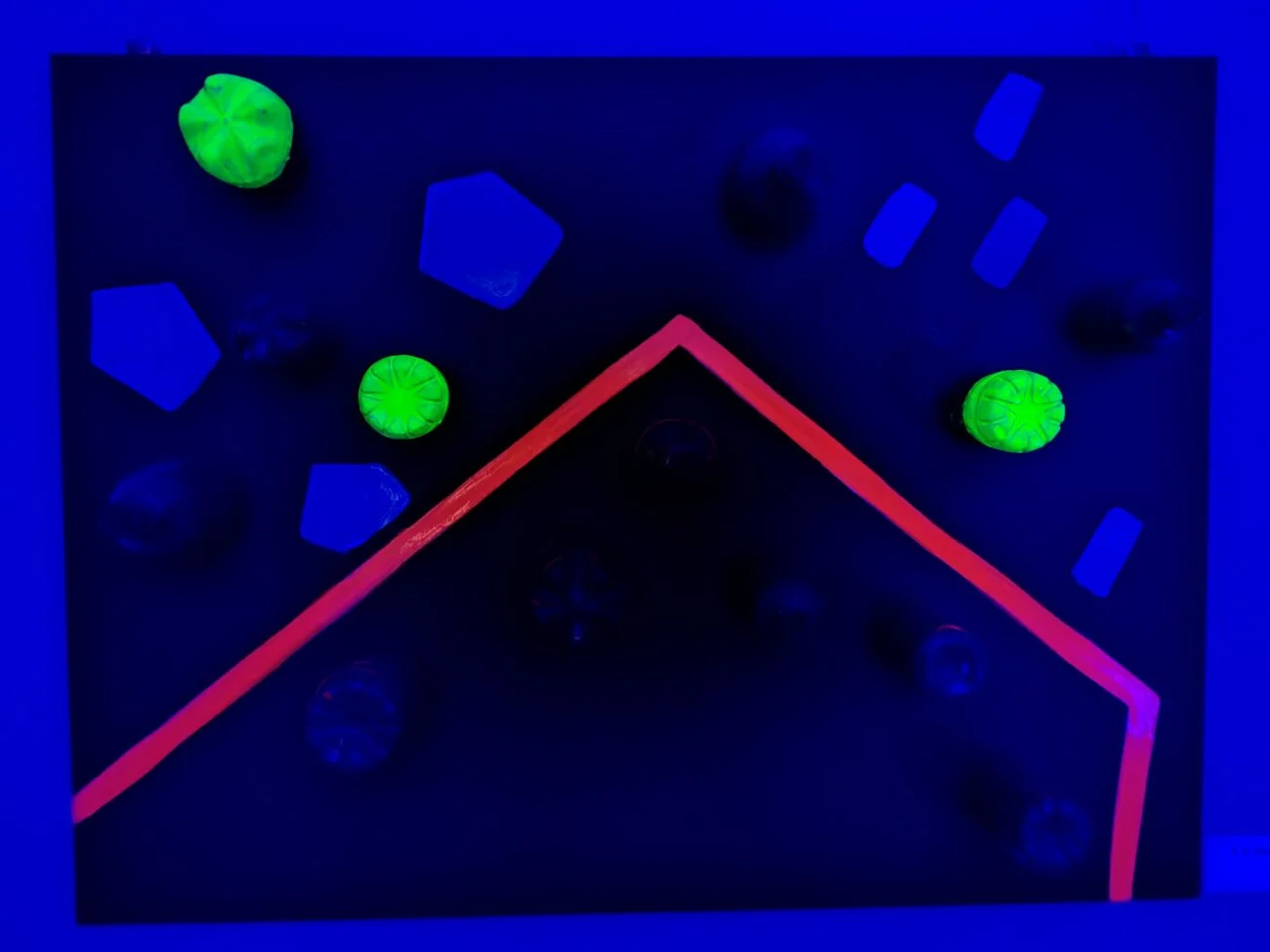
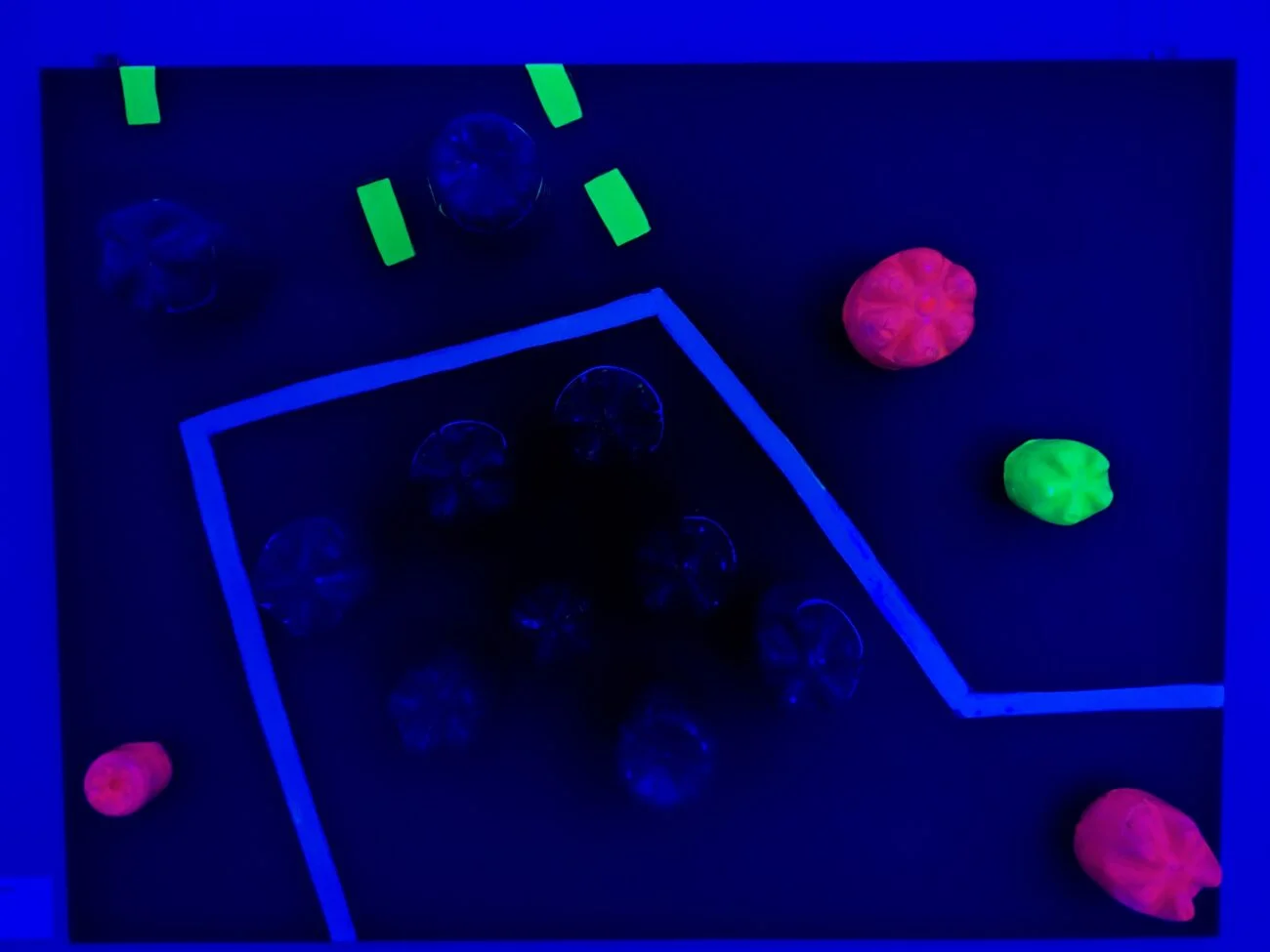
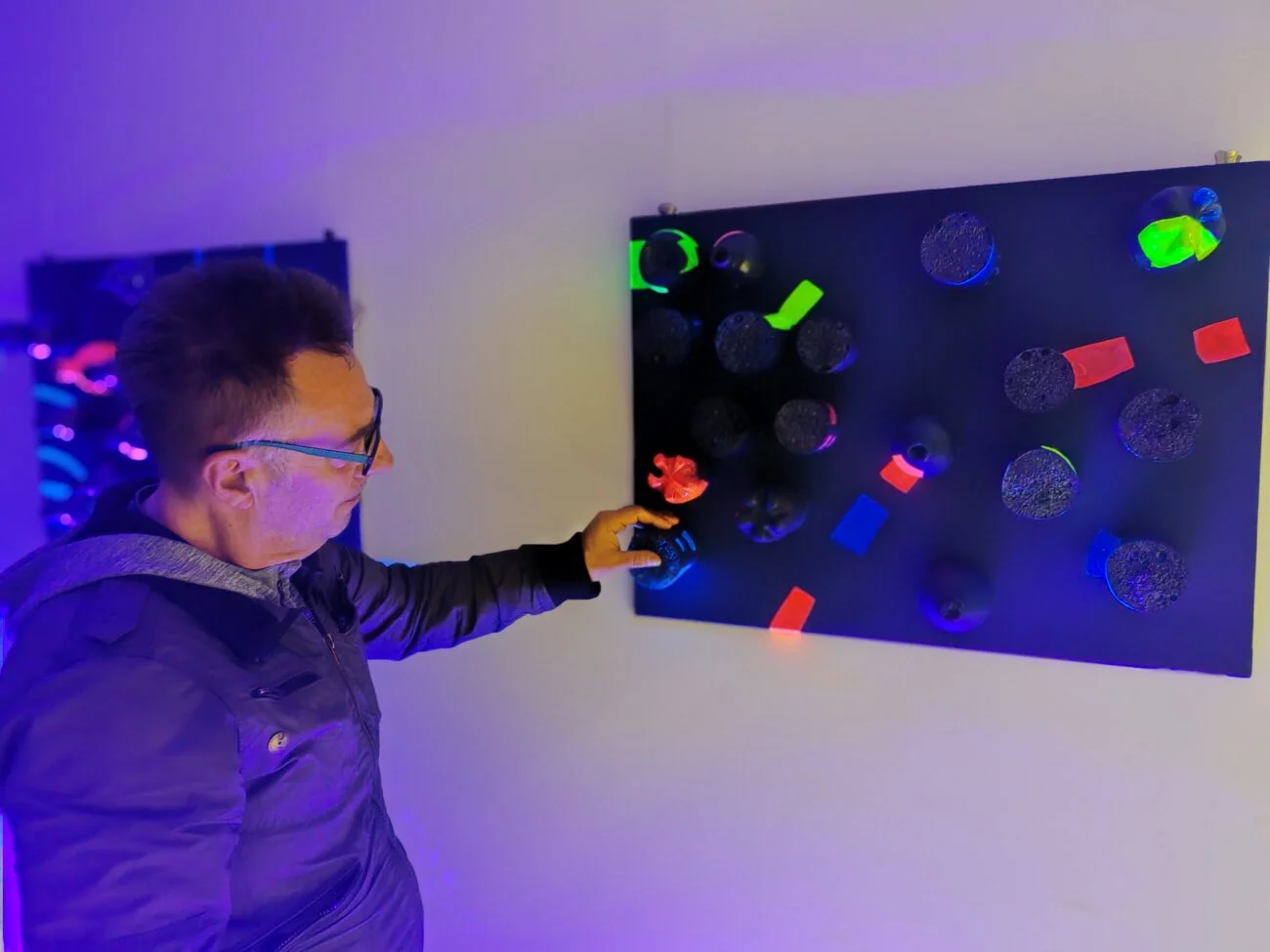
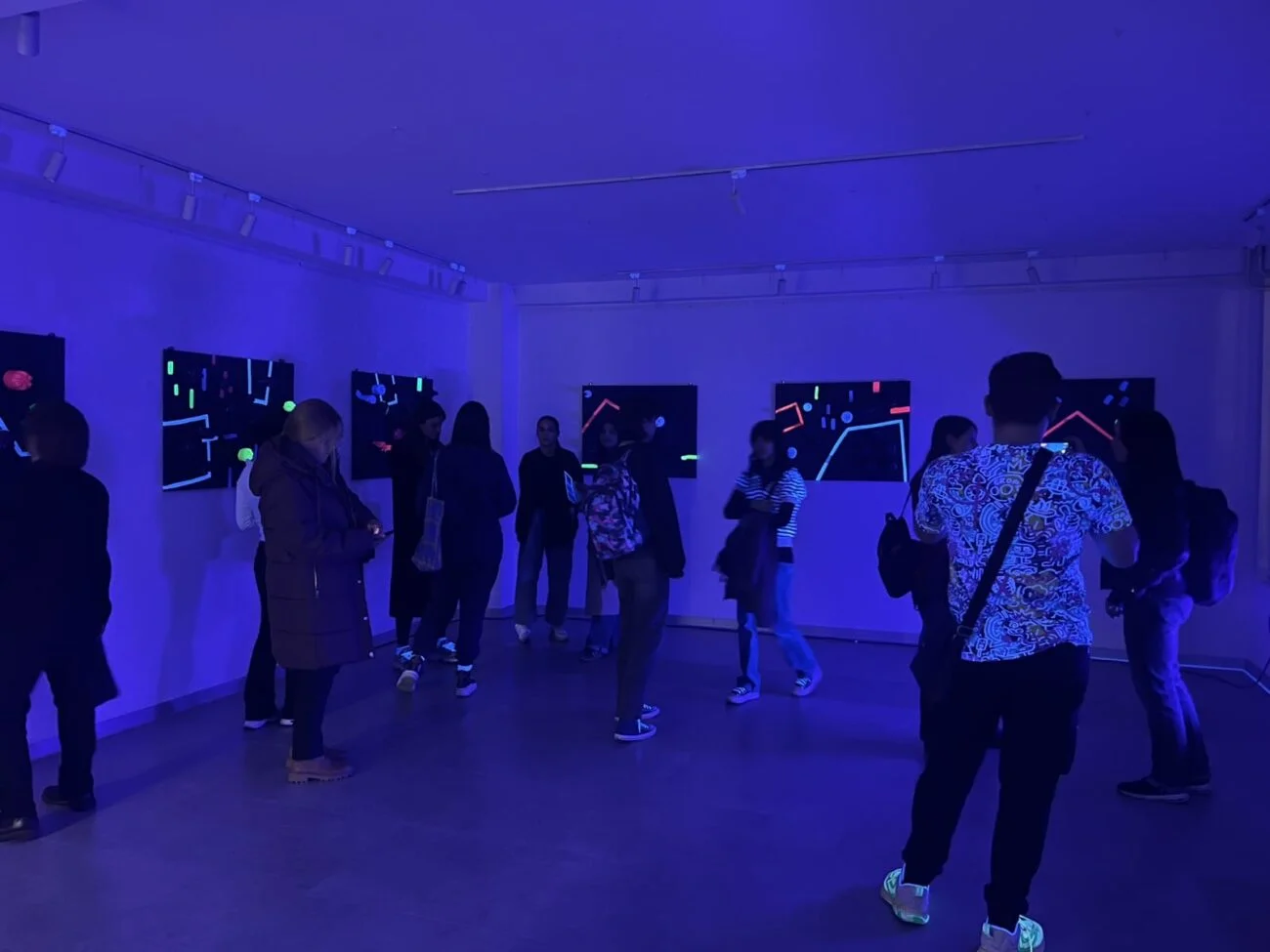
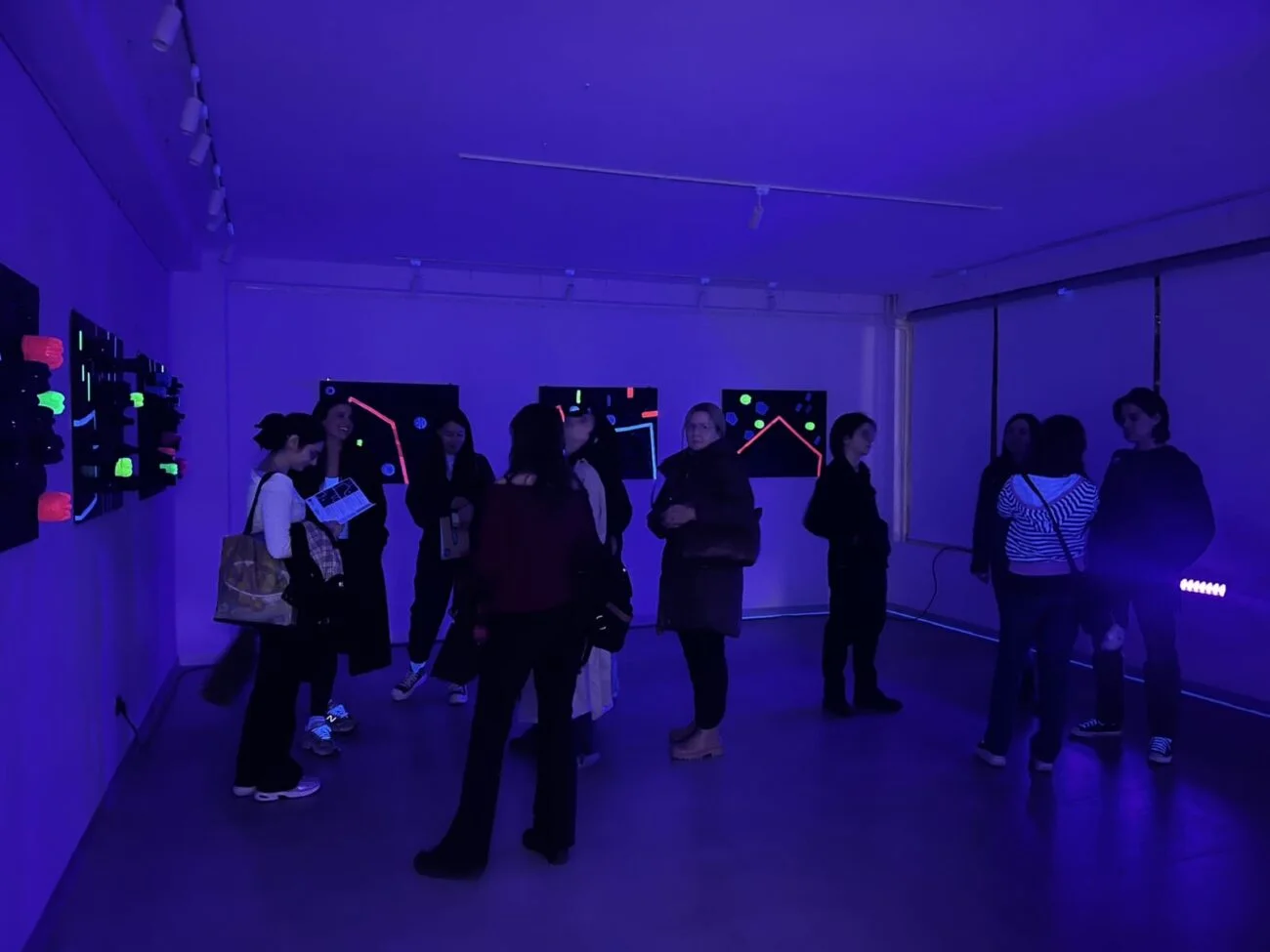
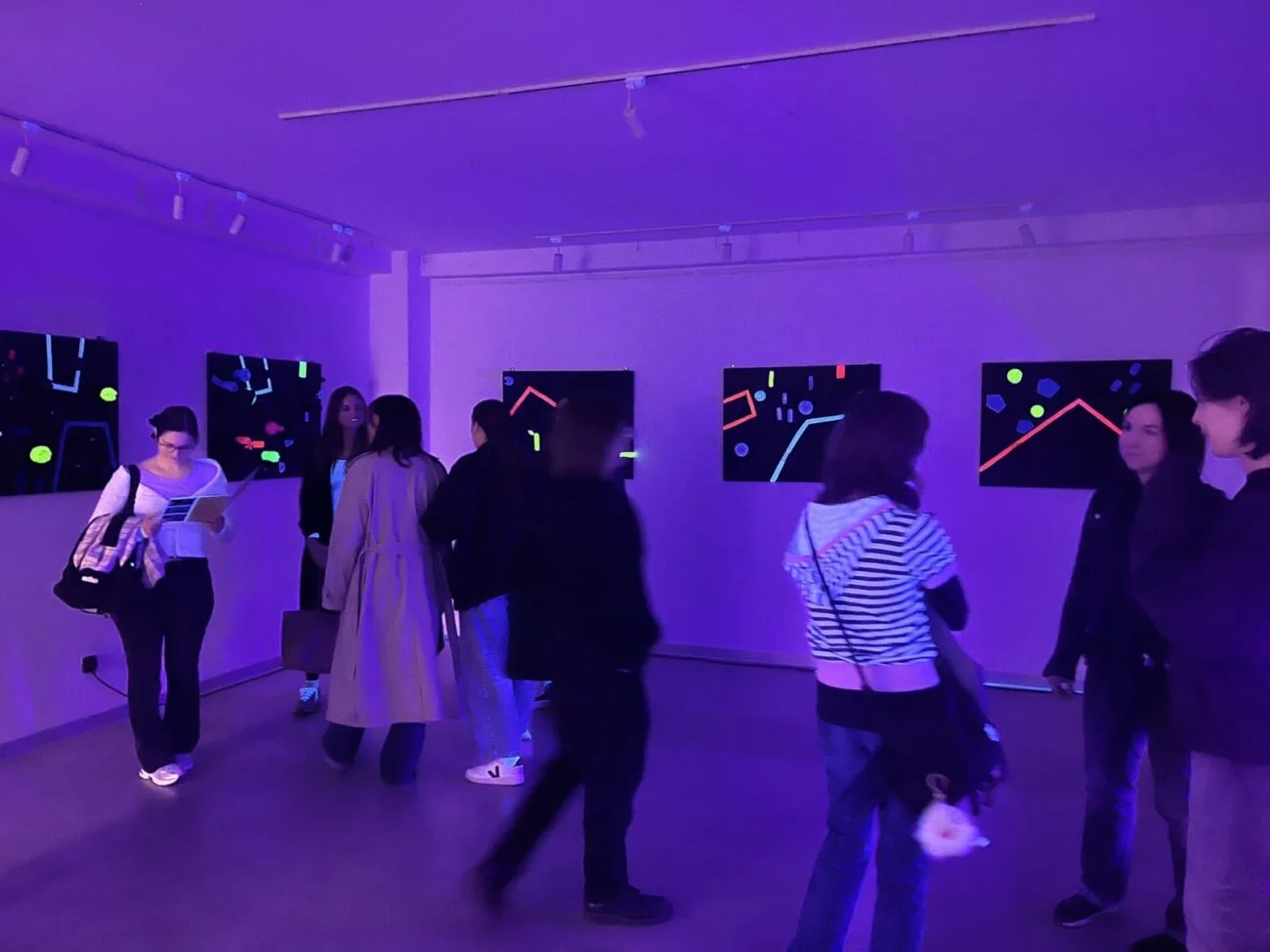
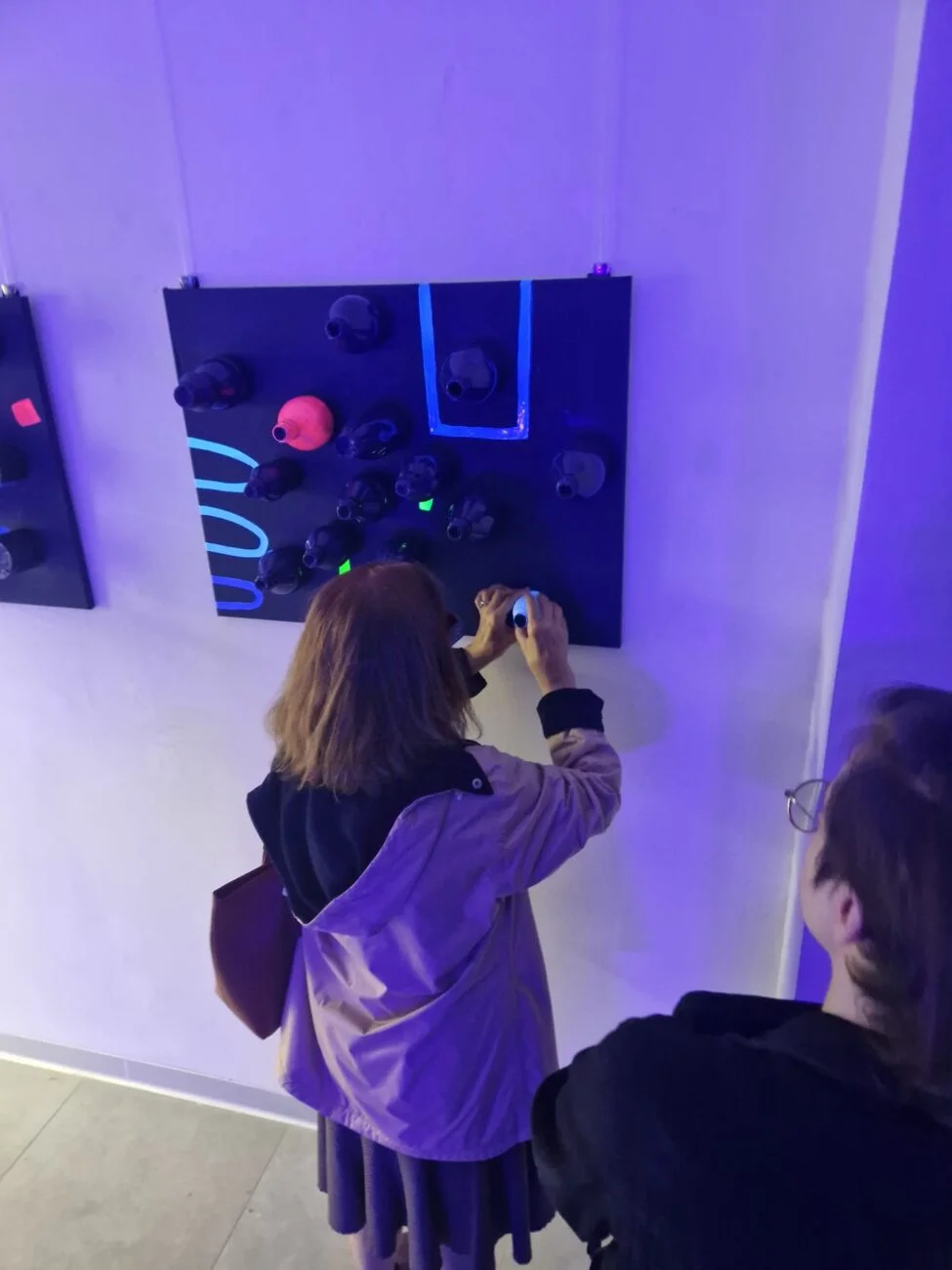
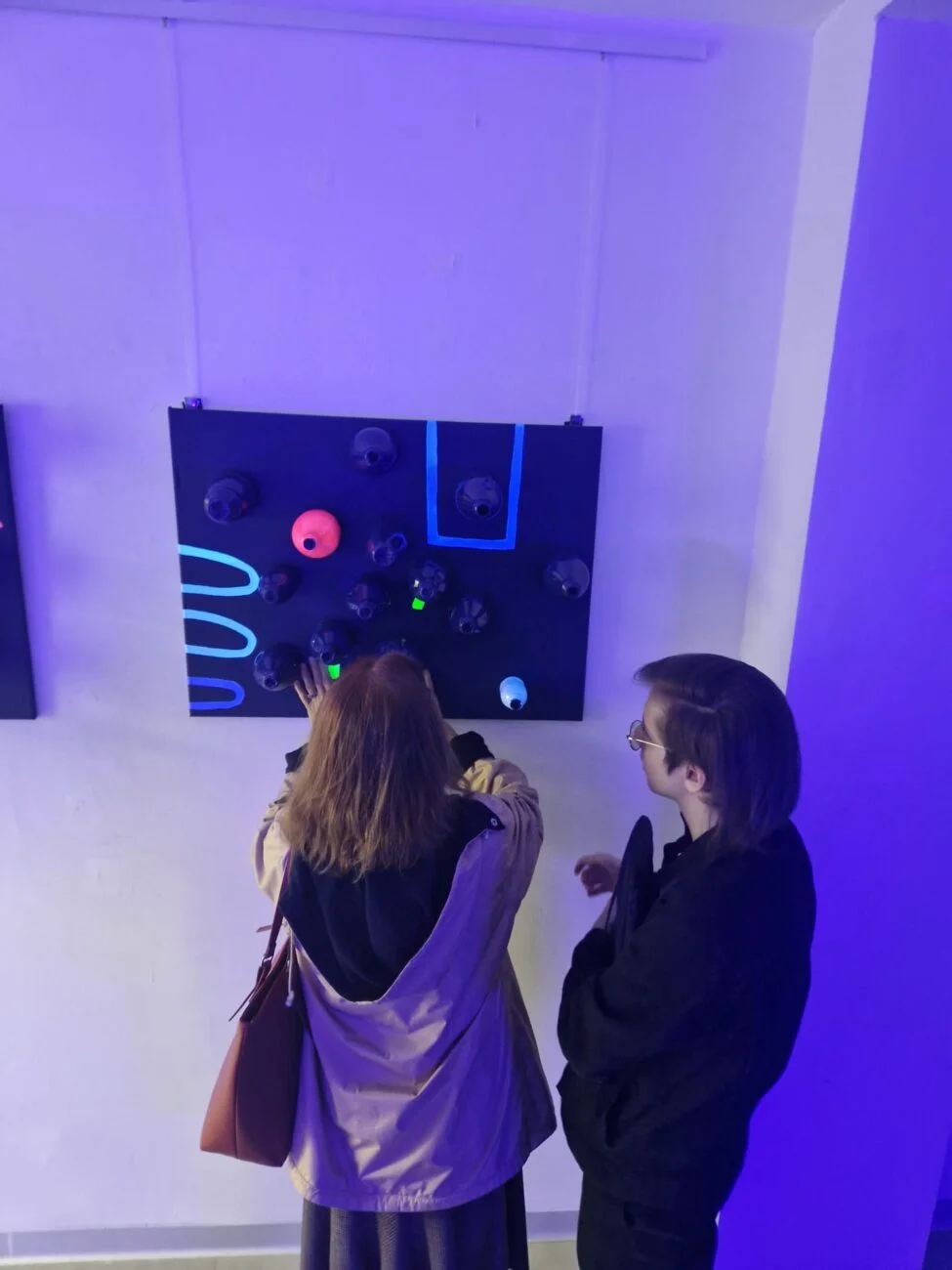
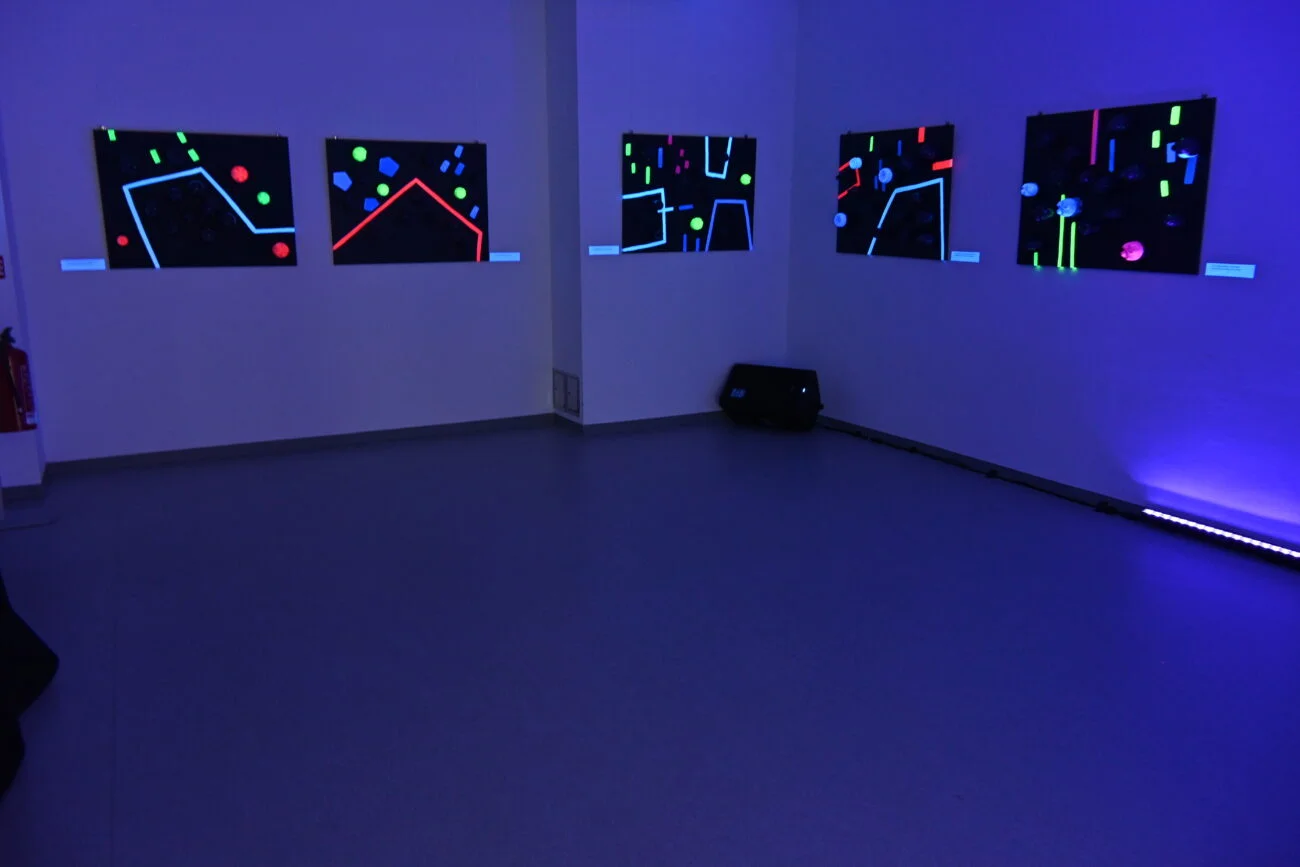
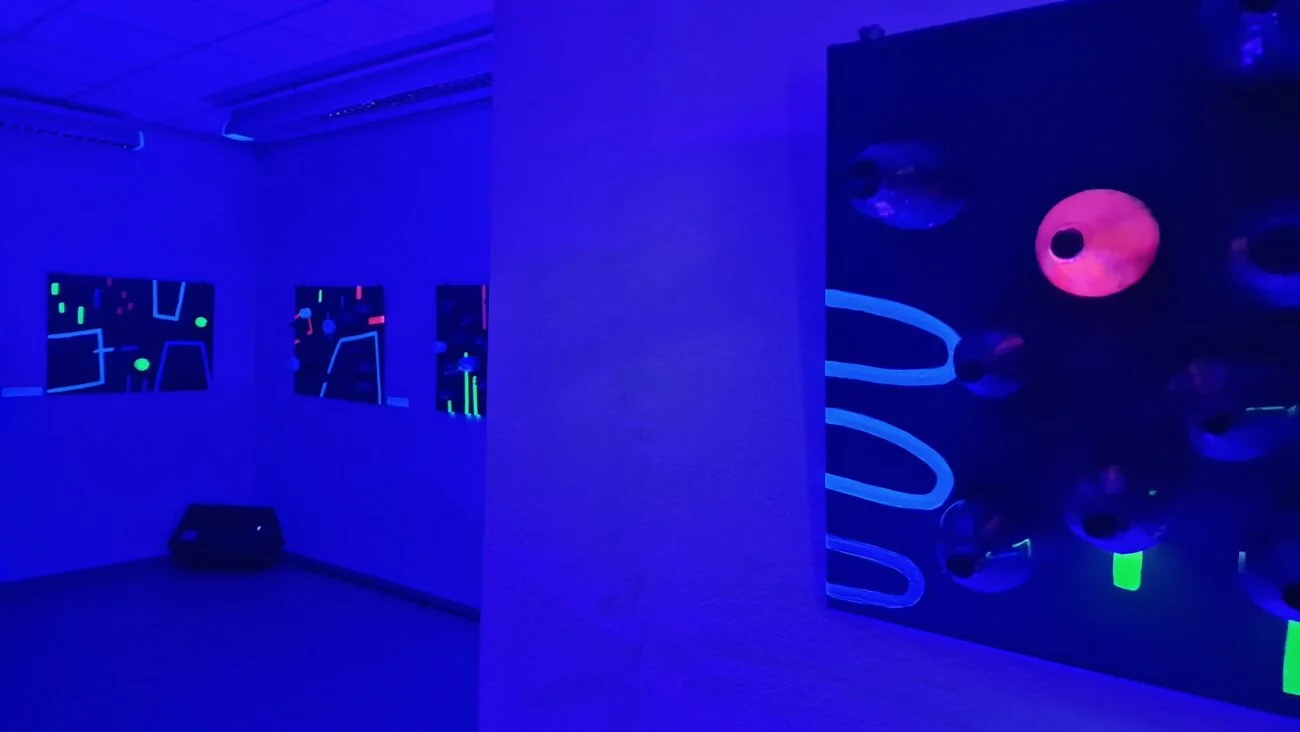
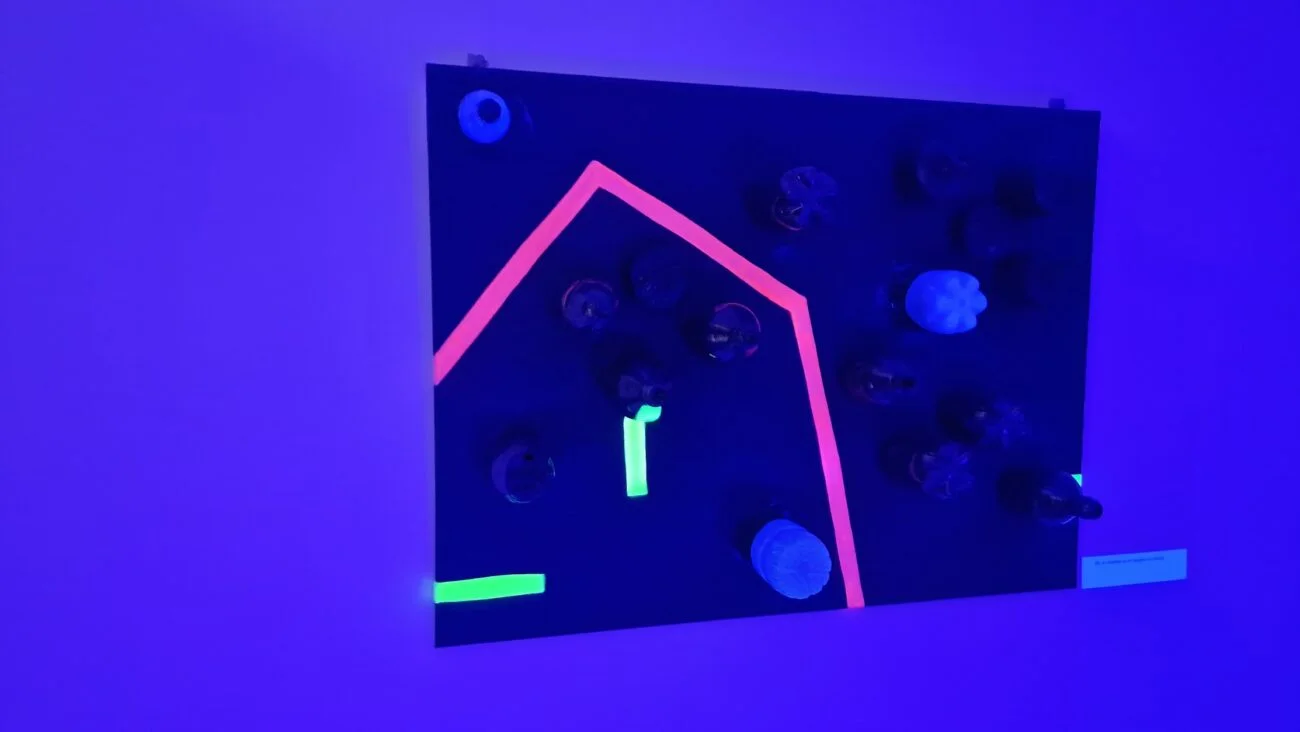
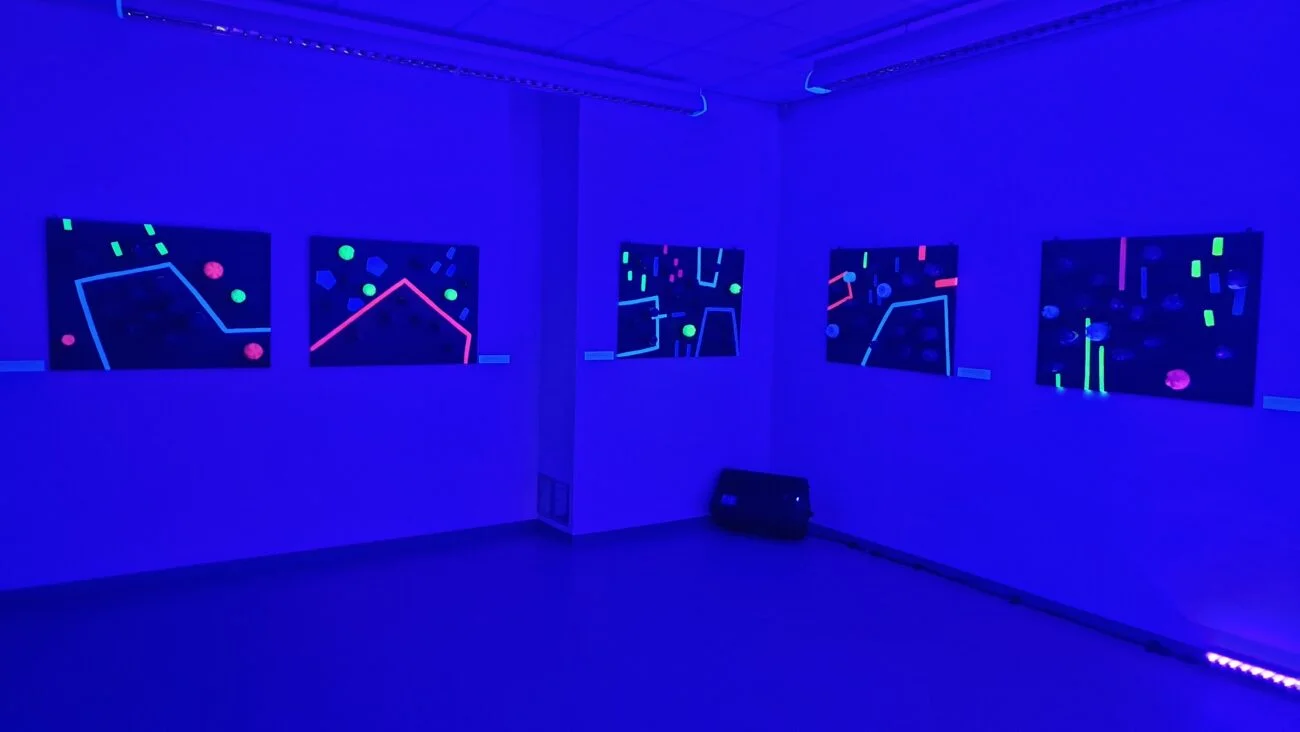
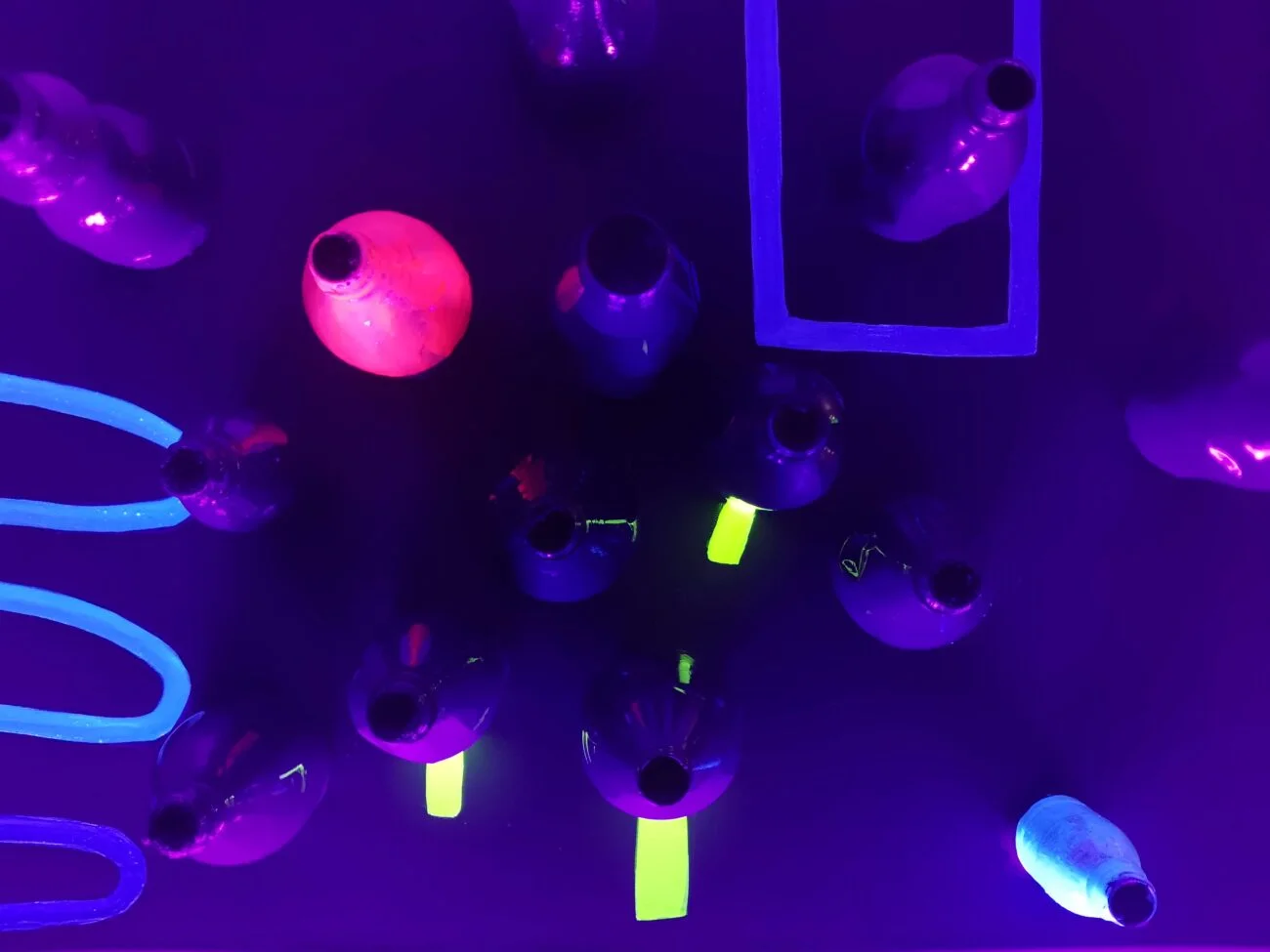

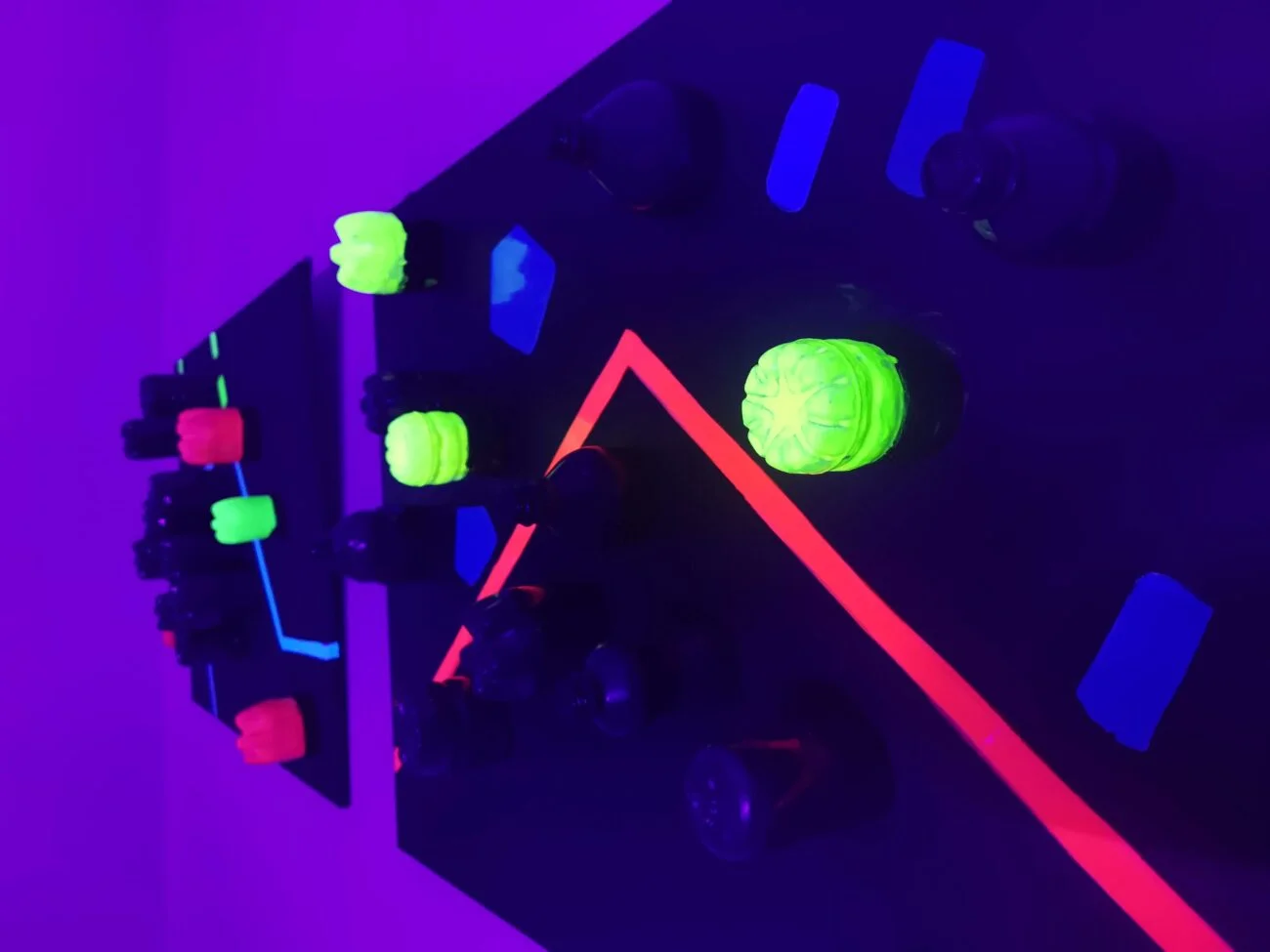
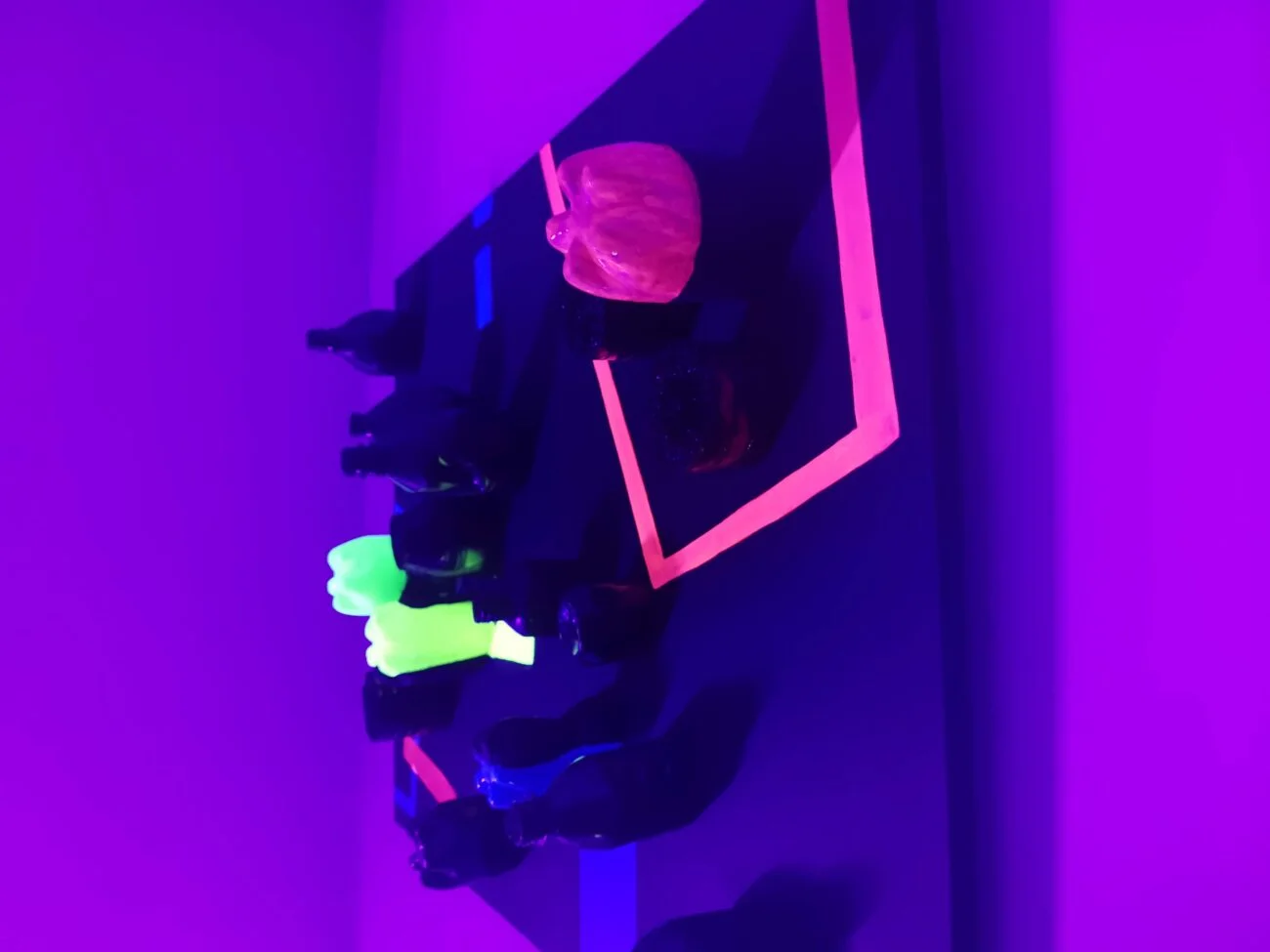
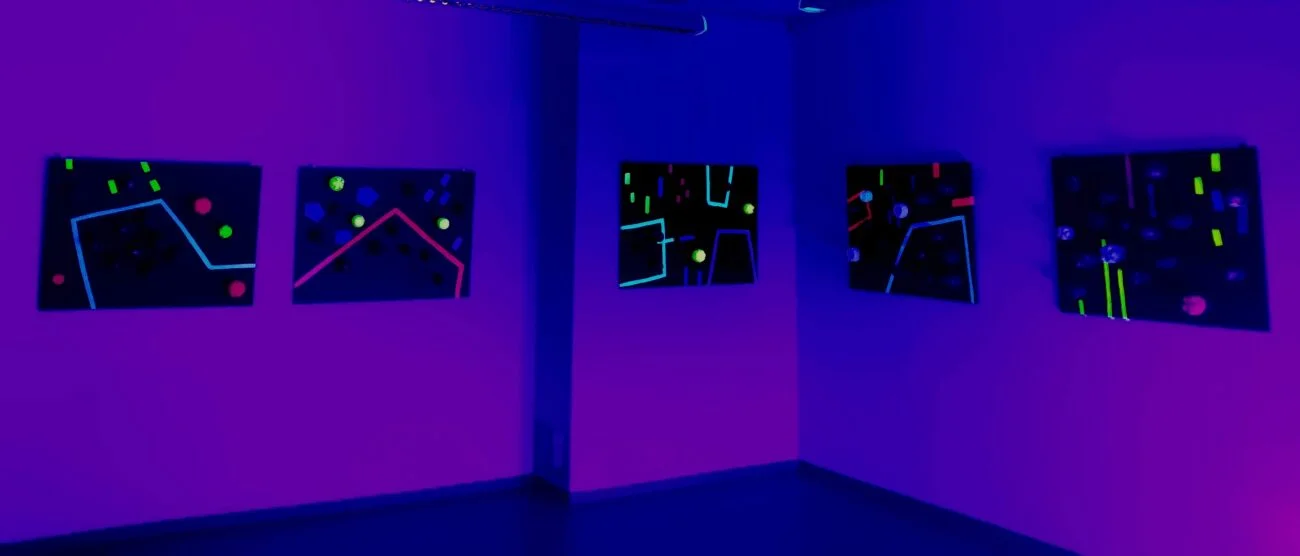
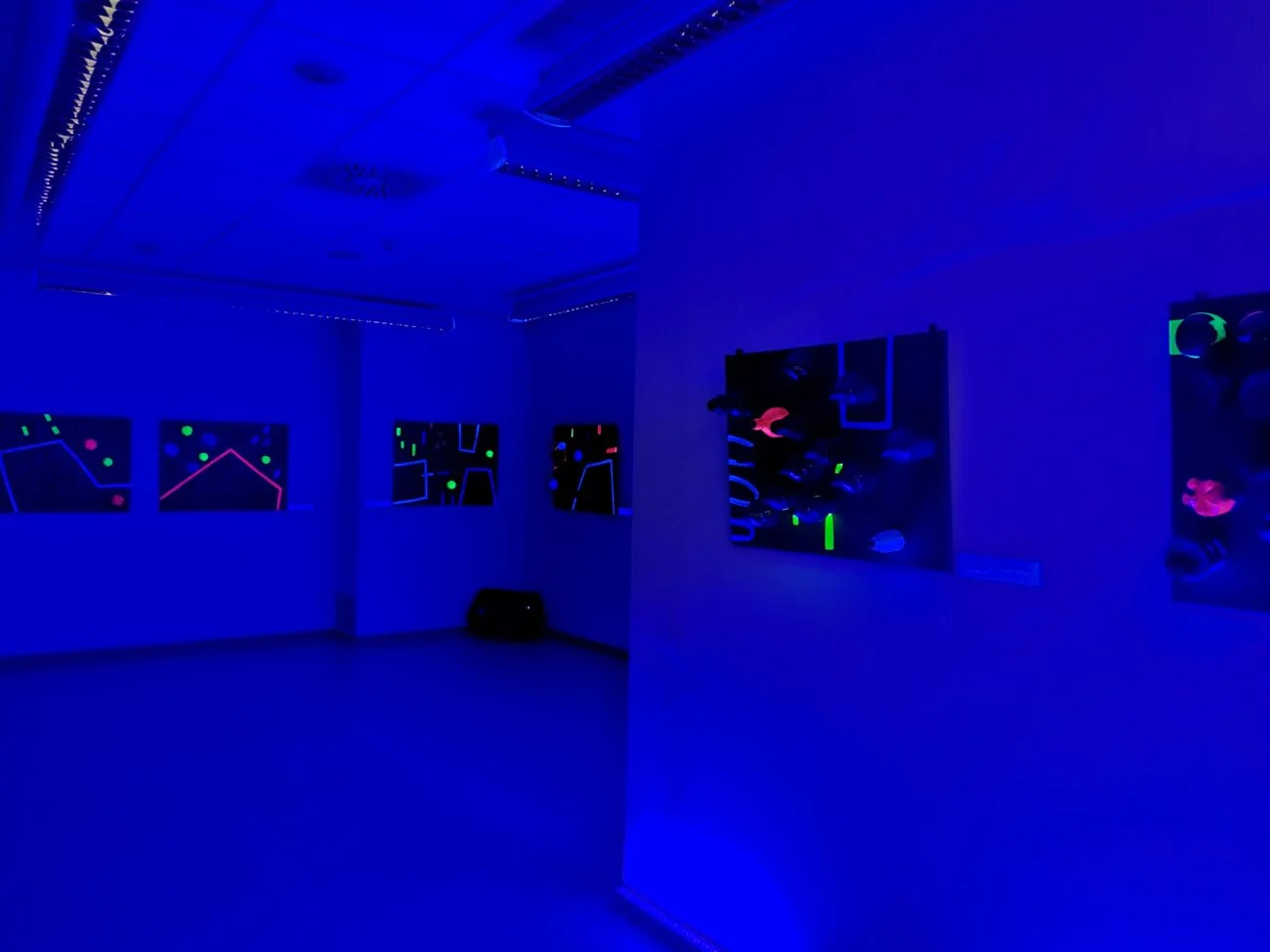
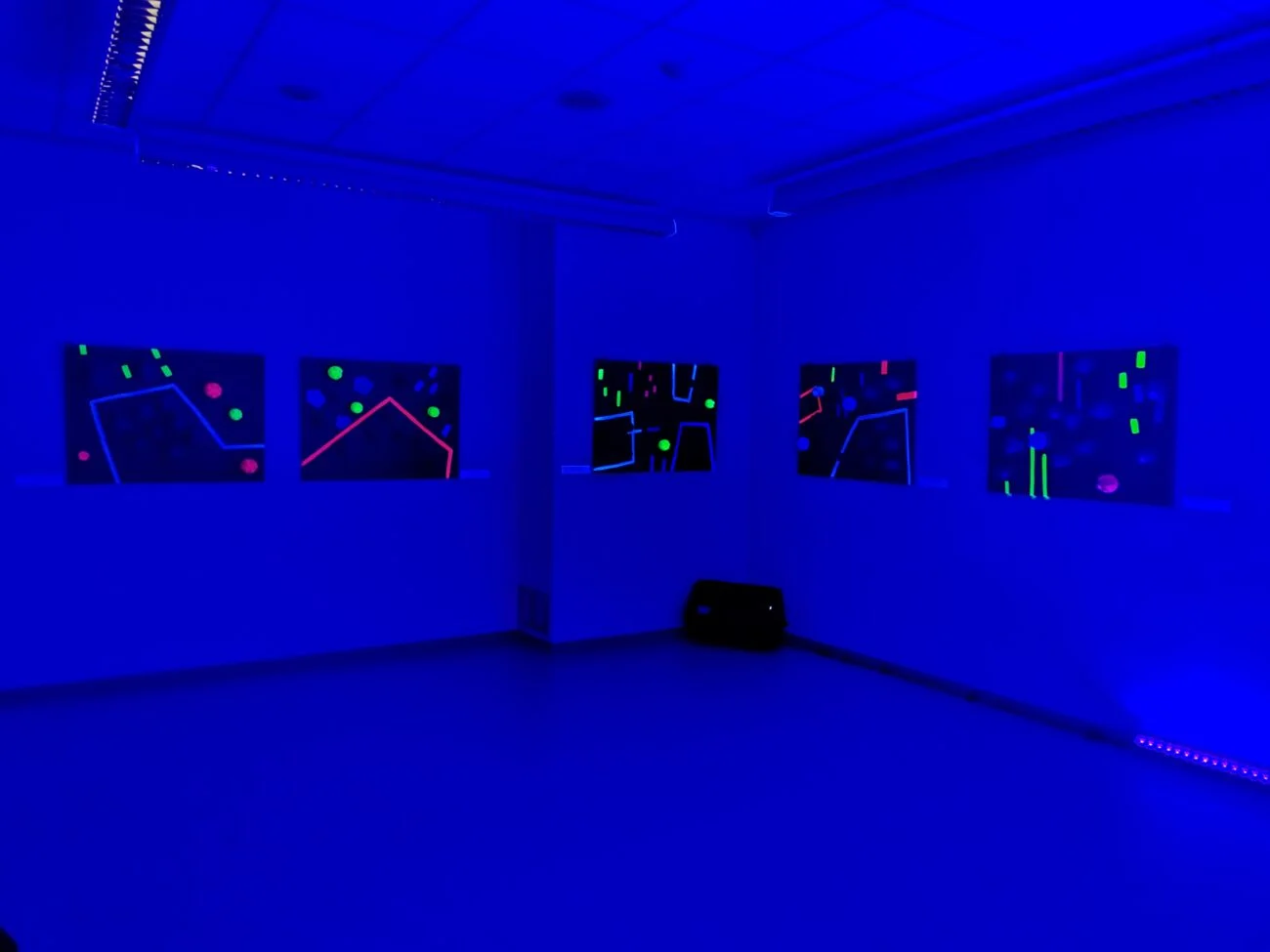
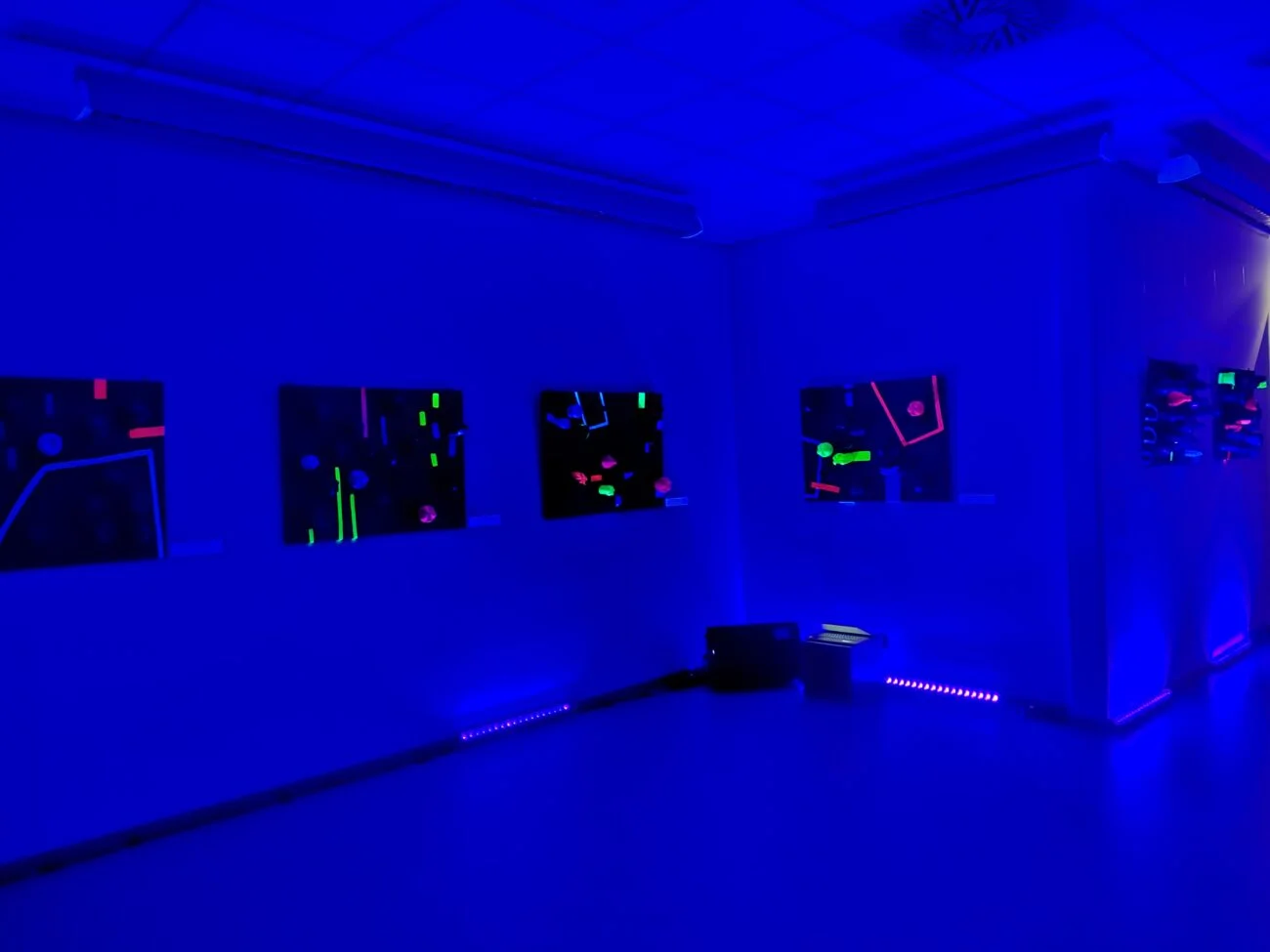
Works from the cycle Requiem for the Sea are shaped like reliefs on canvas. They speak of the sea as a space of memory and reminder, as well as the need for new forms of sensory perception and empathy, thereby strengthening the connection between the manifestation of the physical world and the experience of our inner world.
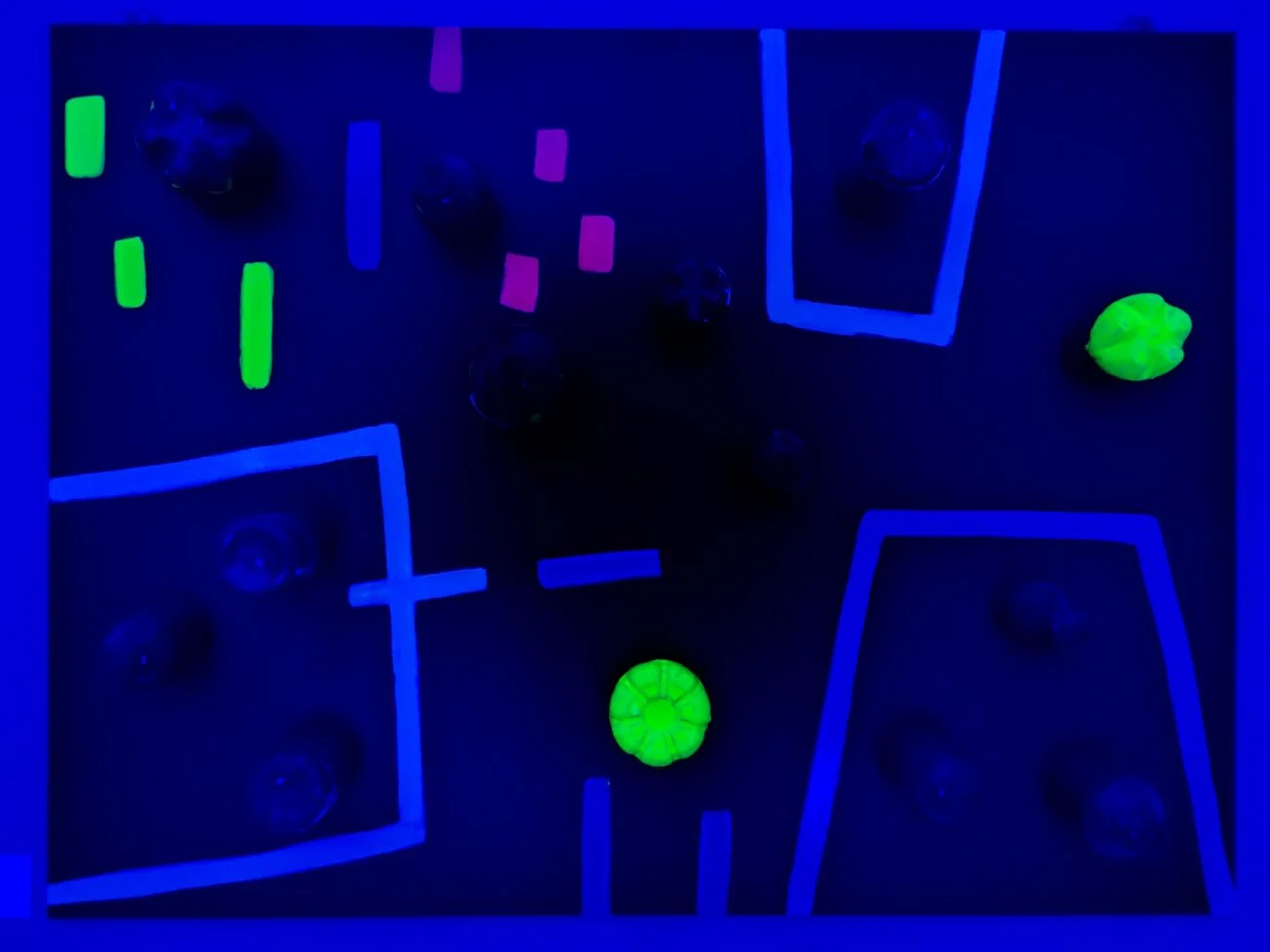
Fragments of plastic bottles are transformed into organic shapes reminiscent of stylized coral structures, seaweed, or fossilized remains of the seabed. Waste material, taken out of the context of pollution, is transformed into rhythmic surfaces and emphasized textures that invite tactile exploration. In doing so, it acquires a new symbolic, aesthetic, and social connotation and opens up space for critical thinking about society and its functioning today.
The compositions are based on the contrast of a dark blue background – a metaphor for the depths of the sea – and fluorescent tones that pulse under UV light like bioluminescent organisms. Due to their intensity, they attract attention and signify a strong emotional transformation. Shimmering lines and surfaces create a dynamic between darkness and light, opening up a space for dialogue between the present and the absent, life and its disappearance. The fluorescent color emphasizes the fragility and transience of the sea, while the relief surface suggests its materiality and multilayeredness.
By using plastic – one of the most serious contemporary polluters of the sea – the artist draws attention to the pressing ecological problem, transforming the threat into an artistic sign. The visual language enables direct, universal communication, free from verbal expression and based on the sensory experience of the individual. The author combines abstraction and suggestion: she opens the forms enough for us to recognize numerous fragments of the sea within them, while simultaneously keeping them as autonomous, visually strong structures.
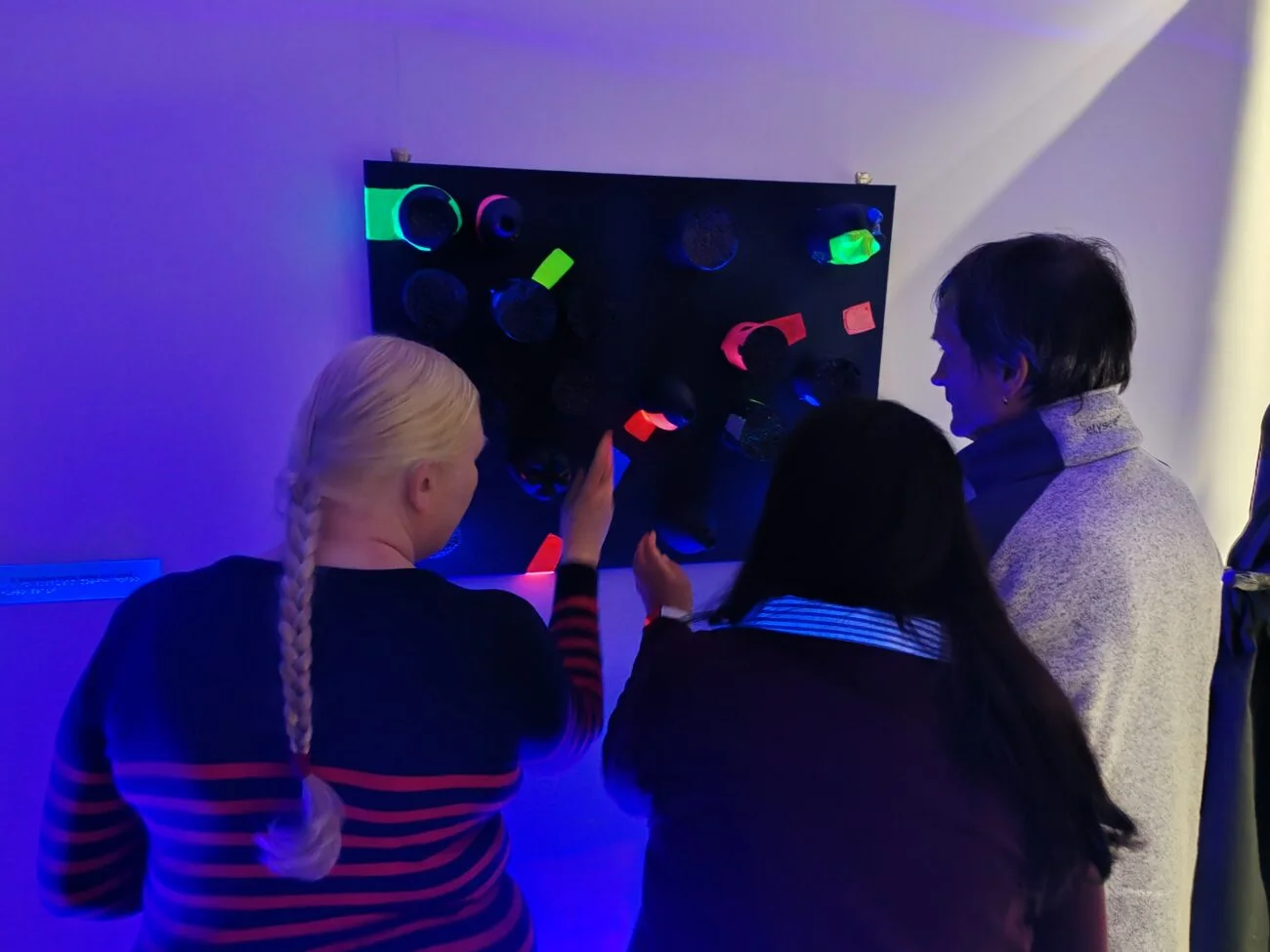
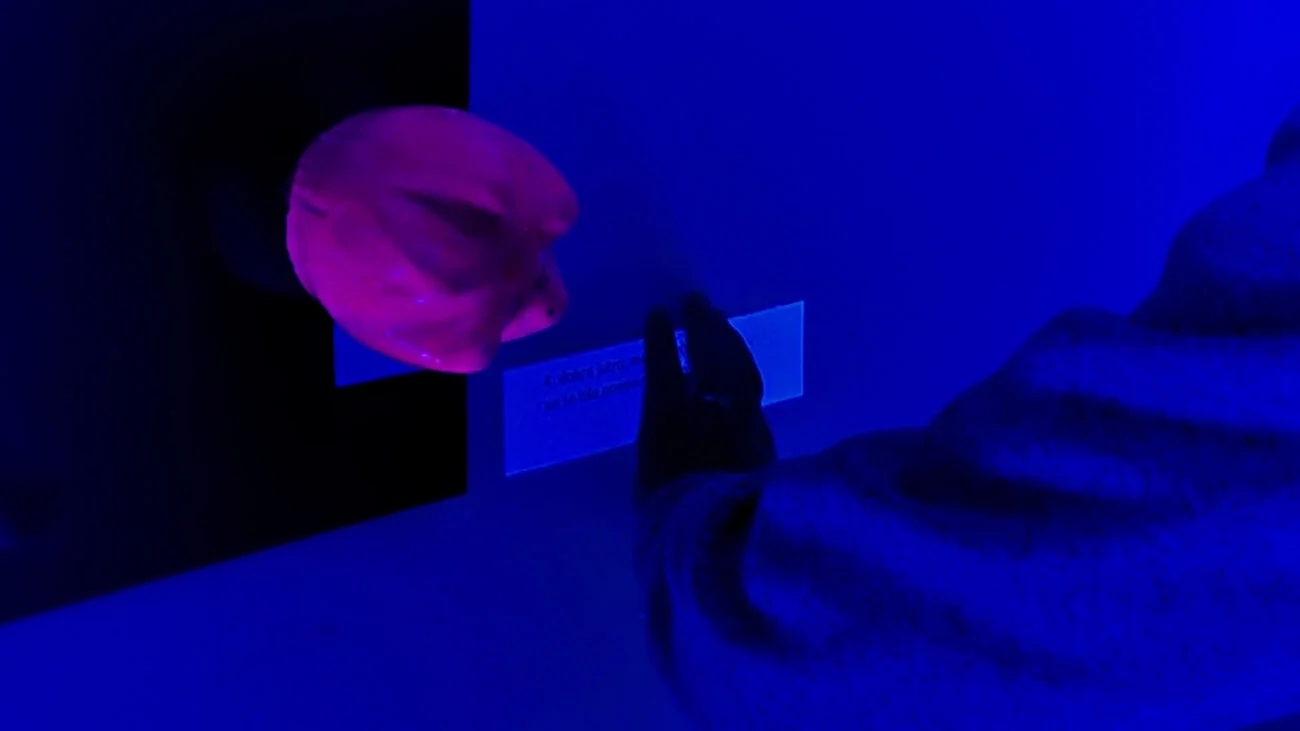
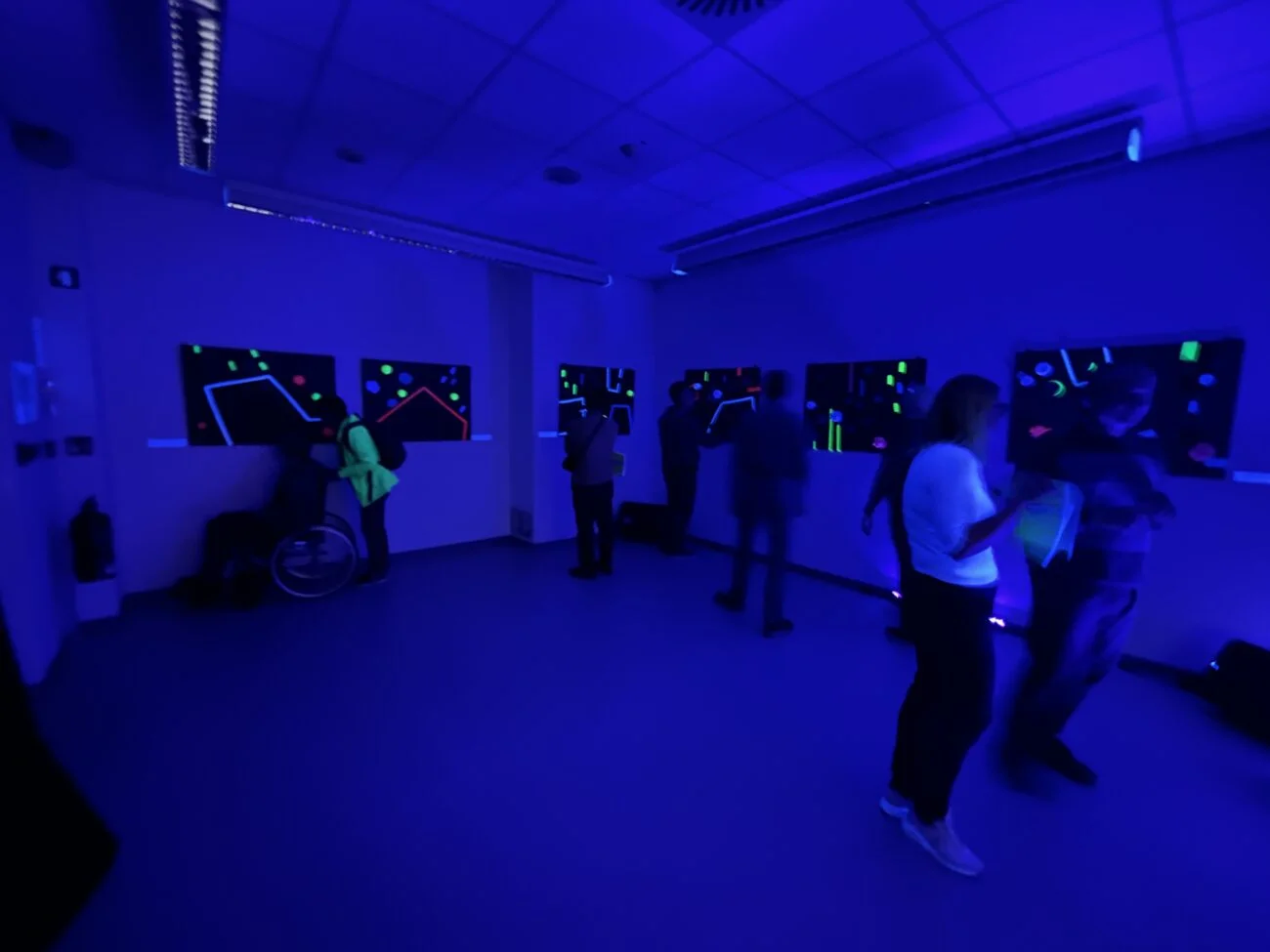
In the dimly lit gallery space, all visitors are confronted with the experience of limited vision, bringing them closer to the perception of visually impaired individuals, who can also experience the work tactilely. As tactile-visual objects, the works operate on multiple levels of perception – from aesthetic to sensory and symbolic. The darkness of the space further emphasizes the dramatic nature of the exhibited works and immerses the viewer in the experience of the sea, which is both alluring and endangered. It serves as a reminder that the sea, once a bearer and a key factor in human life, has become an exhausted ecosystem due to human activity. At the same time, it invites the visitor to reflect and strive to reduce sea pollution, as an expression of gratitude for its grandeur and significance for human life.
Ambient music Requiem for the Sea by composer Srđan Berdović further deepens the audience’s immersion into a meditative atmosphere and creates a synesthetic experience, where visual, tactile, and auditory elements merge into a unified whole.
This contemporary requiem is a tribute to the sea that is disappearing before our eyes and a reminder of the responsibility we bear for its future – as it remembers every trace that human activity leaves on it.
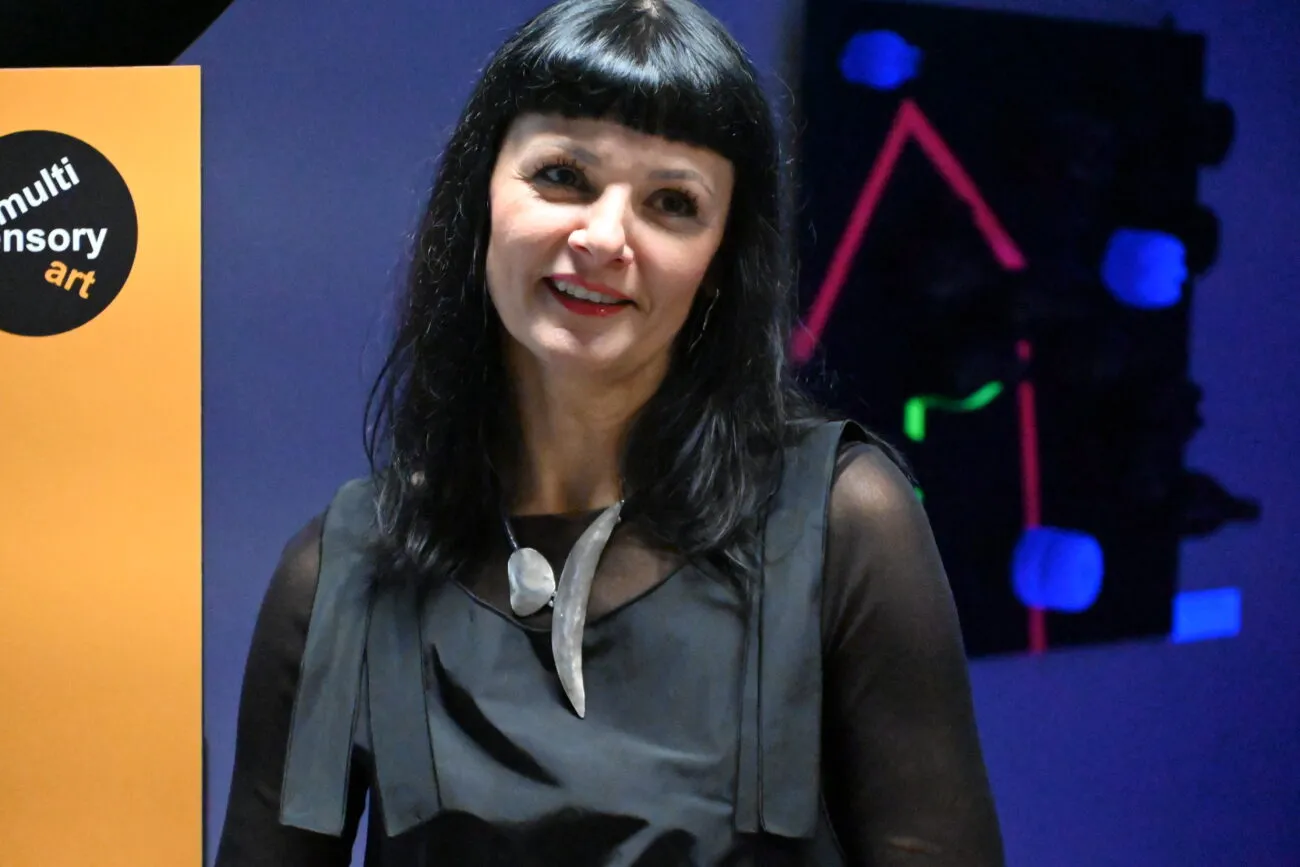
mr. art Jasmina Runje
COMPOSITIONAL MUSIC:
The author of the music is Srđan Berdović, a composer and guitarist who graduated in classical guitar and composition from the Mannes School of Music – The New School for Music in New York. His piece Requiem for the Sea, imbued with a meditative and elegiac mood, complements the visual layer of the installation and builds a suggestive auditory space of memory and reminder.
The work was performed at the San Francisco Conservatory of Music by the renowned Japanese multi-percussionist Haruke Fujii, a member of the Grammy Award-winning ensemble Silkroad.
She studied at Tokyo National University, Juilliard School, and Mannes College of Music in New York. Today, she teaches at the San Francisco Conservatory of Music and serves as Associate Artistic Director in the Silkroad ensemble.